
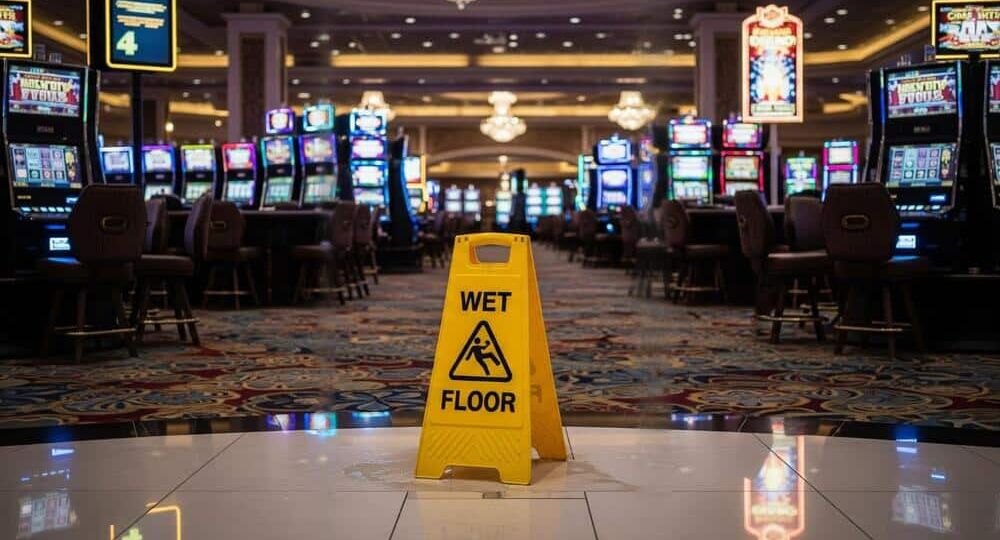
A sudden fall inside a Las Vegas casino can be frightening, embarrassing, and confusing, especially if you are visiting from out of town. The important thing is that you do have rights. A casino slip and fall is usually a premises liability incident, which means that if a dangerous condition on the property causes your fall and the casino fails to use reasonable care, you may have a claim. This can apply whether the incident happens on the Las Vegas Strip, in Downtown on Fremont Street, or in resort corridors in Paradise or Henderson.
Answering the Question: What Happens if You Fall at a Las Vegas Casino?
When a guest falls inside a casino, the experience usually follows a familiar pattern. In some cases, casino security or staff respond quickly, and in other situations, guests struggle to get help in a crowded gaming area. Staff may help you to a nearby chair, an employee hallway, or a first aid station, and someone may ask what happened and whether you want medical attention. In many casinos, an incident report is completed, but that document is often written from the staff member’s point of view rather than from the injured guest’s perspective.
Behind the scenes, surveillance footage is often bookmarked or pulled for internal review. Risk management personnel or insurance representatives may be alerted even while you are still sitting on the floor or waiting to speak with a supervisor. Many visitors assume that the casino will pay their medical bills simply because the fall happened on the property, but that is not how these claims work. Whether the casino is responsible depends on the reason you fell and whether the property owner or operator failed to fix or warn about a dangerous condition in time. What you do in the hours and days after the fall can make a real difference in how a future claim is evaluated.
What Usually Happens Inside the Casino Right After a Fall
A typical sequence inside a Las Vegas casino after a slip and fall may include:
- Security or floor staff respond, or in some cases fail to respond promptly
- The guest is moved to a chair, back room, or first aid area
- Staff complete an incident report based on their own observations
- Surveillance video of the area is bookmarked or reviewed by casino personnel
- Risk management or insurance representatives are alerted behind the scenes
These steps help the casino build its own version of events. Your own account, photographs, and medical documentation often become crucial to balancing what is in the casino’s internal file.
Do Casinos Have to Pay if You Slip and Fall on Their Property?
Casinos in Las Vegas do not automatically have to pay for every slip and fall that occurs on their property. They may be legally responsible when a dangerous condition exists, and the casino knows or should know about it, yet fails to correct the hazard or warn guests within a reasonable time. If that dangerous condition causes a fall, and the fall leads to real injuries and financial losses, premises liability law may allow a claim.
In some situations there may be no liability, such as when a guest trips over an open and obvious condition or creates the hazard a moment before the fall. In other situations there may be potential liability, especially when known hazards are left unaddressed in busy areas where casino guests are expected to walk. The specific facts, timing, and available evidence determine whether a particular case has legal merit.
Common Causes and Injuries in Las Vegas Casino Slip and Fall Accidents
Las Vegas casinos operate around the clock and welcome thousands of guests every day from the Strip, Fremont Street, and nearby resorts in Paradise and Henderson. Heavy foot traffic, alcohol service, buffets, events, and complex floor layouts create constant pressure on cleaning and maintenance routines. When inspections are rushed or corners are cut, dangerous conditions can remain on the floor long enough to cause serious injuries.
Spilled drinks on hard tile, wet floors after mopping without warning signs, loose or bunched carpet, and broken or uneven flooring are all common hazards inside casinos and resort properties. Lighting also plays a role, particularly when dim or flashing lights conceal puddles, steps, or abrupt changes in elevation. Escalators, stairways, and ramps can become unsafe when edges are worn, handrails are defective, or lighting is poor. These conditions can turn a normal walk through a casino into a serious event for both local residents and tourists who traveled to Las Vegas for work or vacation.
When a guest falls, the resulting injuries can range from sprains and bruises to fractures, torn ligaments, spinal injuries, and traumatic brain injuries. Wrist, ankle, and hip fractures frequently occur when someone tries to brace a fall or lands hard on a tile or concrete surface. Knee and ankle ligaments can tear when a foot slides on a slick surface or catches on a raised edge. Back and neck injuries are common when the body twists or lands awkwardly, and head impacts can lead to concussions, post concussion symptoms, or more severe traumatic brain injuries. In some cases, guests develop chronic pain conditions such as complex regional pain syndrome, which can affect mobility and quality of life long after the trip to Las Vegas has ended.
Common Hazards That Lead to Casino Slip and Fall Injuries
Some of the most common hazards that contribute to casino slip and fall injuries include:
- Spilled drinks and food left on hard tile floors
- Wet or freshly mopped floors without adequate warning signs
- Loose or bunched carpet and raised edges at seams or transitions
- Broken tiles, uneven flooring, or cracked concrete in walkways
- Dim or flashing lighting that hides puddles, steps, or changes in elevation
- Escalator or stair issues, such as worn edges or unstable handrails
- Hazards near bars, buffets, restrooms, and crowded pool decks
Where Slip and Falls Happen Most Often in Casinos and Resorts
Slip and falls inside casinos and resorts tend to occur in high traffic areas. Casino floors near bars, buffets, and restrooms often see frequent spills combined with constant movement. Entryways and lobby areas can become slick when guests track in water from pools, ride shares, or rainy weather. Stairways, escalator landings, and ramps are common trouble spots when maintenance and lighting are not consistent. Outside the main gaming areas, pool decks, dayclubs, parking garages, and valet zones present additional risks when surfaces are wet, crowded, or poorly marked.
Typical Injuries from Casino Slip and Fall Accidents
The injuries that follow a casino slip and fall can disrupt far more than a weekend trip. Many guests suffer fractures to the wrist, arm, ankle, or hip that require casting, surgery, or long periods of rehabilitation. Torn ligaments in the knees and ankles can lead to ongoing instability, pain, and difficulty walking, especially on stairs or uneven ground.
Back and neck injuries may appear as soft tissue strains at first and then progress to more serious problems as swelling increases or preexisting conditions are aggravated. Head impacts can cause concussions, post concussion headaches, dizziness, and memory issues that persist for weeks or months. In more severe cases, guests may face long term mobility limitations, chronic pain, or nerve conditions that affect work, travel, and family responsibilities.
Understanding Your Legal Rights Under Nevada Casino Premises Liability Law
In Nevada, casinos and resort properties that invite guests onto their premises have a duty to use reasonable care to keep areas under their control reasonably safe. This duty extends to gaming floors, hotel hallways, restaurants, buffets, pool areas, and other spaces where guests are expected to walk. Property owners and operators must inspect for hazards, correct dangerous conditions within a reasonable time, and provide adequate warnings when a hazard cannot be fixed immediately.
To pursue a slip and fall claim, an injured guest generally needs to show that a dangerous condition existed, that the casino knew or should have known about that condition, that the hazard caused the fall, and that the fall led to actual injuries and financial losses. Nevada law includes innkeeper provisions, such as Nevada Revised Statutes (NRS) 651.015, that address the responsibilities of hotels and similar establishments to their guests. In casino slip and fall cases, those provisions work together with general premises liability and negligence law to shape the legal standards that apply.
Time limits are also important. Nevada’s general statute of limitations for most personal injury claims, including many slip and fall cases, is two years from the date of injury under NRS 11.190(4)(e). Missing this deadline can bar most claims, regardless of how strong the facts might seem. Nevada also follows a comparative negligence system. If an injured guest is found partially at fault, for example by running, walking while heavily intoxicated, or ignoring clear warnings, the guest’s recovery can be reduced by that percentage of fault. If the guest’s share of fault exceeds Nevada’s threshold, recovery may be prevented entirely.
Who May Be Liable for a Slip and Fall in a Las Vegas Casino?
Responsibility for a casino slip and fall can extend beyond a single entity. Possible defendants may include:
- The casino operator that runs the gaming floor and public areas
- The property owner or entity that controls the building
- A separate hotel company associated with the resort
- Maintenance or cleaning contractors responsible for inspection and cleanup
In large resort properties, different companies may handle operations, ownership, and maintenance, and each may play a role in how the hazard arose or persisted. A careful investigation is often necessary to identify which parties should be included in a claim.
How Nevada Premises Liability and Innkeeper Laws Apply to Casino Falls
Nevada premises liability law focuses on whether the casino acted reasonably under the circumstances. In a slip and fall case, this analysis usually examines how the dangerous condition developed, how long it was present, whether staff had actual or constructive notice of the hazard, and what they did to address it. For example, if spilled drinks remain on a busy walkway near a bar for an extended period without inspection, cleanup, or warning signs, that can support an argument that the casino did not use reasonable care.
Innkeeper laws, including NRS 651.015, recognize that hotels and similar properties have special responsibilities toward guests who stay on their premises. At the same time, these laws do not make casinos guarantors of guest safety in every situation. Slip and fall claims still depend on proof of a dangerous condition, notice, a failure to fix or warn, and a clear link between the hazard and the guest’s injuries.
Time Limits and Comparative Fault in Nevada Casino Slip and Fall Claims
Time limits and fault rules play a central role in Nevada casino slip and fall cases:
- Most personal injury claims arising from slip and falls are subject to a two year statute of limitations under NRS 11.190(4)(e)
- Missing this deadline can bar most claims, even when the injuries are serious
- If a guest shares some responsibility for the fall, compensation can be reduced, and recovery may be prevented if the guest’s percentage of fault exceeds Nevada’s comparative negligence threshold
Because many casino guests return home shortly after an injury, it is important to address these timing and fault issues as early as possible.
What To Do Immediately After a Slip and Fall at a Casino
The steps you take after a casino slip and fall can protect both your health and your legal options. Immediate safety and medical care should come first. After that, careful reporting and documentation can help preserve evidence that may otherwise disappear quickly in a busy Las Vegas resort environment.
If you suffer a serious injury, someone should call 911 so that emergency medical personnel can evaluate you at the scene. For significant trauma, local facilities such as University Medical Center and Sunrise Hospital frequently receive casino and hotel guests from the Strip and surrounding areas. Even if you feel able to get up and walk away, it is important to see a doctor promptly, because pain and stiffness often worsen after the initial shock wears off. While you are still on the property, notifying casino staff and asking for an incident report helps establish a record of what happened, but you should avoid guessing about fault or speculating about the cause of the hazard.
The following sequence can help you protect your health and your potential claim.
- Seek medical attention immediately for serious injuries, including calling 911 if necessary, and arrange a prompt medical evaluation even if symptoms seem mild at first.
- Report the fall to casino security or management and ask that an incident report be created, while providing basic facts without making guesses about fault or causes.
- Take photos or video of the area where you fell, including the hazard, the surrounding floor, nearby lighting, any warning signs or the absence of signs, and your shoes and clothing.
- Collect the names and contact information of witnesses, including other guests or employees who saw the hazard, the fall, or the condition of the area before staff cleaned or changed it.
- Preserve key evidence such as clothing with visible liquid or debris, hotel key cards, receipts, time stamped photos, and all medical paperwork related to the incident and follow up care.
- Use caution with written statements, releases, or offers of free rooms, meals, or gaming credits that appear connected to waivers, and consider speaking with an attorney before signing documents that could affect your rights.
Many casino slip and fall cases weaken when surveillance footage is overwritten, inspection logs are discarded, or the scene is altered before anyone documents it. Acting methodically can help keep critical information from disappearing.
Casino Slip and Fall Damages and Settlement Expectations
A casino slip and fall claim is meant to address the financial and personal impact of an injury, not to provide a windfall. Damages often include medical expenses, costs of future care, lost income, and the effect of pain and limitations on daily life. However, no lawyer can ethically promise a particular settlement figure, because value depends on the strength of the evidence, the nature of the injuries, and many other factors.
Medical expenses may include emergency room treatment, diagnostic imaging, hospital stays, surgery, physical therapy, pain management, and follow up visits with specialists. Some guests need ongoing care such as injections, rehabilitation, or treatment for conditions like complex regional pain syndrome. Lost wages can arise when a guest misses work immediately after the fall and during later treatment or recovery. In more serious cases, injuries can reduce long term earning capacity. Out of pocket costs may include additional hotel nights, changes to flights, transportation to medical appointments, and other travel disruptions. Nevada law also recognizes non economic damages such as pain and suffering, emotional distress, and loss of enjoyment of life.
Settlement values are influenced by many factors, including how clearly the evidence shows that the casino failed to use reasonable care, how severe and permanent the injuries are, how the injuries affect work and daily activities, and any comparative fault issues. The venue and the casino’s own risk assessment also play a role. Publicly reported cases, including large verdicts such as a multimillion dollar award related to a casino premises incident, illustrate that serious injuries and strong liability evidence can lead to substantial outcomes. However, past results do not guarantee, warrant, or predict future cases, and every claim must be evaluated on its own facts.
Types of Damages Available After a Casino Slip and Fall
Damages in a casino slip and fall case may include:
- Medical expenses for emergency care, hospital treatment, surgery, physical therapy, and pain management
- Future medical care such as rehabilitation, injections, CRPS treatment, and assistive devices
- Lost wages and loss of earning capacity when injuries affect the ability to work
- Out of pocket travel and lodging costs, including extra hotel nights, transportation, and trip interruption expenses
- Non economic damages for pain and suffering, emotional distress, and loss of enjoyment of life
Factors That Influence Casino Slip and Fall Settlement Value
Several key factors commonly influence settlement discussions in Nevada casino slip and fall claims:
- Strength of liability evidence, including proof of the dangerous condition and notice
- Severity and permanence of injuries and the need for surgery or long term care
- Impact of the injuries on work, income, family responsibilities, and daily activities
- Age, overall health, and preexisting conditions of the injured guest
- Comparative negligence issues and any argument that the guest shares fault
- The venue, jury pool, and the casino’s assessment of trial risk
These factors tend to interact with one another, which is why two cases that seem similar at first can resolve very differently.
Why Settlement Amounts Vary So Widely in Nevada Casino Cases
Settlement ranges in casino slip and fall cases differ from one claim to another, even within the same property. A simple way to understand the variation is to compare common scenarios.
| Scenario | Liability Strength | Injury Severity | Settlement Expectation |
| Quick cleanup, little evidence of hazard | Weak | Mild sprain, quick recovery | Lower, limited damages likely |
| Clear spill on video, short recovery | Moderate | Fracture with full healing | Moderate, time limited losses |
| Long standing hazard with strong notice | Strong | Surgery, long rehabilitation | Higher, broader medical and wage losses |
| Permanent impairment and chronic pain | Strong, well documented | Lifelong limitations and CRPS | Potentially significant, case specific |
These examples are for illustration only. Actual outcomes depend on the specific facts, available evidence, and the way a particular case develops. Past results do not guarantee, warrant, or predict future cases.
How a Las Vegas Casino Injury Lawyer Can Help After a Fall
After a casino slip and fall, many guests are dealing with pain, travel logistics, and pressure from casino representatives or insurance adjusters. A Las Vegas casino injury lawyer can step in to protect your interests, organize the investigation, and prepare the case for negotiation or trial. This support can be especially important for visitors who return home to another state or country shortly after the incident.
An attorney can send preservation letters to the casino to help protect surveillance footage, inspection logs, and maintenance records before they are lost or overwritten. The lawyer can request incident reports, safety policies, and other internal documents that may not be available to guests on their own. When needed, the firm can work with safety experts, medical professionals, and other specialists to explain how the hazard developed and how the injuries will affect your life. Throughout the process, the firm can manage communication with casino risk management departments and insurers so that you are not pressured to accept an unfair resolution.
If settlement discussions do not lead to a fair result, a trial focused firm can file a lawsuit in Clark County courts and prepare the case for trial. This includes taking depositions, presenting evidence, and explaining the case to a judge and jury. A Las Vegas casino injury lawyer can also coordinate with clients who live outside Nevada through phone, video, and secure document sharing, so that distance does not prevent a strong presentation of the claim.
When You Should Call a Las Vegas Casino Slip and Fall Lawyer
It is wise to contact a Las Vegas casino slip and fall lawyer as soon as possible after an injury. Early legal advice can help you avoid common mistakes, such as signing releases, giving recorded statements, or waiting too long to see a doctor. An attorney can review the facts, explain how Nevada law applies, and outline realistic options for moving forward.
Reaching out early is particularly important for tourists. Once you leave Las Vegas, it becomes harder to return to the scene, locate witnesses, or secure local records. Speaking with a lawyer while memories are fresh and evidence is still available can make a meaningful difference.
How a Lawyer Assists Locals and Tourists After a Casino Fall
A Las Vegas casino injury lawyer helps both local residents and out of state visitors navigate the aftermath of a fall on the Strip, Downtown, or in nearby areas such as Paradise, Henderson, North Las Vegas, and greater Clark County. For locals, this may include coordinating ongoing medical care, dealing with work interruptions, addressing family responsibilities, and preparing the case for litigation close to home. For tourists, the focus often includes managing the claim from a distance, coordinating with out of state doctors and employers, and minimizing the need for repeated trips back to Nevada while the case moves forward.
In both situations, a Las Vegas casino injury lawyer can gather records, communicate with the insurance company, and build your case with trial in mind so that you are not left to handle the process alone.
Call the Captain After a Casino Fall in Las Vegas
If you fell at a casino on the Strip, Downtown, or anywhere in Clark County, you do not have to face the casino or its insurers by yourself. A trial focused Las Vegas injury lawyer can investigate what happened, secure video and incident records, work with your medical providers, and negotiate with insurers while keeping the option of court open.
Call the Captain today at 702-CAPTAIN or contact us online for a free consultation and learn more about your legal options. Early guidance can help protect important evidence, keep critical deadlines on track, and give you a clearer picture of your options under Nevada law. And remember, the firm’s Reduced Fee Guarantee® ensures Drummond Law Firm will not take more in attorney fees than you receive.