6 Reasons Why You Want to Hire an Attorney Who Litigates and Can Take a Case to Trial

At Drummond Law Firm, we understand the complexities of legal disputes and the critical importance of expert legal representation. Specialized litigation attorneys, like ours, are trained to navigate these complexities effectively, ensuring every aspect of your case is handled with precision. From managing detailed legal documentation to strategizing for courtroom success, litigation attorneys are dedicated to safeguarding your rights and achieving the best possible outcomes. 

Enlisting a skilled litigation attorney, especially one from Drummond Law Firm, means securing an advocate prepared to fight diligently for your interests.

1. We Are Experts at Navigating the Complex Legal Systems

Litigation attorneys are essential for navigating the complexities of legal systems, ensuring procedural accuracy and compliance. Professionals like us are critical in handling the intricate details and strict standards of legal procedures. Our expertise ensures that every step in the process adheres to legal norms, protecting the integrity of your case.

Civil law, with its specialized rules and practices, presents unique challenges. Litigation attorneys are vital for interpreting complex legal language and ensuring that documentation and legal precedents are correctly understood and applied. This careful attention to detail can significantly influence the outcome of a lawsuit.

2. We Increase Your Chances of Success

Litigators significantly boost the likelihood of a favorable outcome by expertly managing the presentation of evidence and legal arguments. This strategic organization of case materials and adept articulation of legal theories are essential to influencing court decisions favorably.

Don’t let movies trick you, self-representation is not recommended, especially when the opposing party has legal counsel.The disparity in legal expertise between self-represented individuals and those with professional lawyers can lead to significantly worse outcomes for the former. Hiring a litigator not only levels the playing field, but also enhances the chances of securing a positive result through skilled advocacy and strategic case management.

3. We Provide Financial and Strategic Benefits

Hiring a litigator, despite initial costs, is often a cost-effective decision in the long term. Litigators can prevent expensive legal errors and enhance the financial outcomes of cases by efficiently navigating legal systems, avoiding unnecessary delays that can increase costs. We also ensure that procedural deadlines are met, preventing costly errors such as missed filings or mishandled evidence.

Skilled litigators are also more effective at securing better settlements or pursuing damages. Our expertise in negotiation and deep legal knowledge enable us to build strong cases and advocate effectively for maximum compensation. This is especially critical in complex cases where potential damages are significant.

4. We Protect Your Rights and Interests

Protecting legal rights and interests is crucial in civil litigation, especially in disputes involving significant assets or personal welfare. Litigators are essential in safeguarding these interests, ensuring that legal strategies are aligned with our clients’ best interests and that all legal actions comply with the law.

Litigators prevent legal missteps that could adversely affect a case or the client’s financial standing. We are skilled in handling the complexities of legal proceedings, which includes filing documents correctly and adhering to strict deadlines. Missing a deadline or mishandling documents can jeopardize a case, leading to financial losses or lost claims.

5. We Provide Peace of Mind

Hiring a skilled litigator provides clients with emotional and psychological relief, knowing an expert is navigating the legal complexities. This support allows clients to focus on other important aspects of their lives, helping clients reduce stress and maintain their daily routines without the added pressure of the legal issues.

Additionally, a litigator acts as a buffer between the client and the adversarial nature of legal proceedings. Clients are spared from direct confrontations and the daunting process of navigating the court system alone. The litigator serves as both shield and advocate, protecting the client’s interests and managing the confrontational aspects of litigation.

6. We Are Masters of Documentation and Legal Procedures

Handling legal documents requires precision in preparation, adherence to legal standards, and timely submission. Litigators are trained to meticulously manage these documents, ensuring each is filed correctly and on time. This precision prevents procedural errors that could negatively impact the case.

Litigators’ thorough understanding of procedural steps—including filing the correct documents, adhering to evidence rules, and following courtroom protocols—ensures that every aspect of the legal process is executed flawlessly, minimizing the risk of errors that could compromise the case.

Achieve Success in Legal Challenges with Drummond Law Firm 

At Drummond Law Firm, we understand that hiring a reputable litigation attorney can significantly impact the outcome of your legal disputes. Our expertise in navigating complex legal systems, combined with a proven track record of success, provides strategic financial advantages and robust protection of your rights and interests. Our meticulous attention to legal procedures ensures that every case is managed with the utmost precision and diligence.

We pride ourselves on our ability to handle challenging cases effectively, delivering successful outcomes for our clients. If you’re facing legal challenges, choosing Drummond Law Firm could be the decisive factor in securing the best possible outcome for your situation.

Contact us today to leverage our expertise and experience in handling complex legal matters. Let the Drummond Law Firm make the difference for you!

Understanding Drummond Law Firm’s Reduced Fee GuaranteeĀ® in Nevada

Reduced-Fee Guarantee

At Drummond Law Firm, we stand by our clients every step of the way. That’s why we are the only law firm in Nevada to proudly offer our Reduced Fee Guarantee®—a promise that underscores our dedication to fairness and transparency in legal representation.

What is the Reduced Fee GuaranteeĀ®?

DRUMMOND LAW FIRM GUARANTEES THAT OUR ATTORNEY FEE WILL NOT EXCEED YOUR NET RECOVERY IN A PERSONAL INJURY CASE.

This means that when you trust us to handle your injury case you can have confidence knowing that when you settle your case, our attorney fee will never surpass the amount you receive as your net recovery. We prioritize your interests and ensure that you retain the maximum compensation possible from your settlement.

How It Works:

1. Consultation and Case Evaluation

The process begins with a consultation where you discuss your case details with an attorney at Drummond Law Firm. During this initial meeting, the attorney evaluates your case, assesses its merits, and discusses potential legal strategies to move your case forward.

2. Decision to Settle

If you and the attorney agree to a settlement before trial, the Reduced Fee GuaranteeĀ® comes into play. You decide to settle your injury case before significant time and costs are incurred at a trial. 

3. Settlement Offer

Once you’ve decided to settle, the insurance company or responsible party offers a settlement amount to resolve the case. This settlement offer typically covers medical expenses, lost wages, pain and suffering, and other related damages.

4. Calculation of Net Recovery

Drummond Law Firm calculates your net recovery by deducting certain expenses from the settlement amount.

Your net recovery is determined by deducting the following from your settlement:

  • Attorney Fees
  • Any case expenses and costs advanced by the law firm
  • Any accident-related:
    • Medical Payment Reimbursement Lien(s)
    • Hospital Lien(s)
    • Uninsured Medical Bills
    • Workers’ Compensation Lien(s)
    • Other Unpaid Medical Bills

5. Application of Reduced Fee GuaranteeĀ®

If the attorney fee exceeds your net recovery from the settlement, Drummond Law Firm voluntarily reduces its fee to ensure that it does not surpass your net recovery amount. This ensures that you retain the maximum compensation possible from the settlement.

6. Client Approval

Before finalizing the settlement, you review and approve the breakdown of expenses, including the attorney fee calculation under the Reduced Fee GuaranteeĀ®. This ensures transparency and allows you to make an informed decision.

7. Finalization of Settlement

Once you approve the settlement terms, Drummond Law Firm works to finalize the settlement agreement with the insurance company or opposing party. The Drummond team will resolve your outstanding liens and ensuring that you receive the agreed-upon compensation.

Reduced Fee GuaranteeĀ® in Action: Sarah’s Case Study with Drummond Law Firm

The preceding scenario is entirely fictional and crafted for educational purposes. Names, numbers, and details are purely hypothetical and do not represent real-life cases or individuals. This illustration aims to demonstrate the concept of Drummond Law Firm’s Reduced Fee GuaranteeĀ®.

[wptb id=31503]
[wptb id=31504]

Drummond Law Firm – Get Fair Representation Without The Financial Worries

At Drummond Law Firm, we are the only law firm in Nevada to offer the Reduced Fee GuaranteeĀ®. This commitment reflects our dedication to providing accessible and professional legal representation to all our clients.

If you are facing legal challenges and need assistance, we encourage you to contact Drummond Law Firm today. Our team of experienced attorneys is here to help you navigate your legal issues with confidence and peace of mind. Reach out to us for a consultation and let us help you receive the justice you deserve.

Who is Liable for Your Slip and Fall Injury in Nevada?: A Comprehensive Guide

In Nevada, a business may be held responsible—or liable—for injuries sustained in a slip and fall incident. This includes not only immediate medical costs but also past and future medical bills, lost wages, and the pain and suffering endured. However, establishing liability is not straightforward. The law demands that the business had actual, or constructive, notice of the dangerous condition that led to your fall.

Given these complexities, consulting with an experienced Nevada attorney is paramount. At Drummond Law Firm, we specialize in dissecting the facts of your case and exploring all possible options. It’s essential to recognize that a fall, in itself, does not automatically render a business legally responsible. This article aims to guide you through the legal landscape of slip and fall incidents, emphasizing the critical distinctions between actual and constructive notice, and the responsibilities shouldered by Nevada businesses.

Key Takeaways
Business Liability: Nevada businesses can be held liable for slip and fall injuries if they knew, or should have known, about the hazard.Compensation: Victims can claim compensation for immediate and future medical costs, lost wages, and pain and suffering.Notice of the Condition: Establishing a business’s actual or constructive knowledge of the hazard is crucial for liability.Floor Safety Testing: Advanced testing, including tribometer use, assesses floor slipperiness to support liability claims.Seek Expertise: Consulting with an experienced attorney, like those at Drummond Law Firm, is essential for navigating complex slip and fall claims.

Liability in Nevada for Slip and Falls

In Nevada, the foundation of liability in these cases is built upon the premise that a business must have been aware of the hazardous condition—either through actual or constructive notice—before the incident occurred. This legal framework ensures that victims have a clear path to pursue compensation, provided they can establish that the business knew or should have known about the danger.

Recoverable Damages

For victims of slip and fall incidents, Nevada law provides avenues to recover a range of damages. These encompass not only immediate medical expenses but also:

  • Past and Future Medical Bills: Compensation can cover all healthcare costs related to the injury, from emergency care to long-term treatments and rehabilitation.
  • Past and Future Loss of Wages: If the injury impacts your ability to work, either temporarily or permanently, you may be compensated for lost earnings and future earning capacity.
  • Pain and Suffering: Beyond the tangible costs, victims can seek damages for the physical pain and emotional distress suffered as a result of the accident.

Actual vs. Constructive Notice

These legal terms play a crucial role in determining the liability of a business for injuries sustained on their premises.

Actual Notice

Actual notice is the more straightforward concept of the two. It occurs when a business, or any of its employees, is directly aware of a hazardous condition that could lead to a slip and fall incident. This knowledge could be the result of observing a spill, being informed about it, or even causing it directly. For instance, if an employee knows that a drink was spilled on the floor and does nothing to clean it up, the business is considered to have actual notice of the danger.

The legal implications of actual notice are significant. As highlighted in the case of Sprague v. Lucky Stores, Inc., a business can be held liable if a foreign substance on the floor, known to them, causes a patron to slip and fall. The presence of such a substance typically deviates from the standard of ordinary care expected of businesses, establishing a clear pathway to liability.

“Where a foreign substance on the floor causes a patron to slip and fall, and the business owner or one of its agents causes the substance to be on the floor, liability will lie, as a foreign substance on the floor is usually not consistent with the standard of ordinary care.” Sprague v. Lucky Stores, Inc., 109 Nev. 247, 849 P.2d 320 (1993).

Constructive Notice

Constructive notice, on the other hand, is a more nuanced legal theory that extends liability to cases where a business should have known about a hazardous condition, even if they were not directly aware of it. This form of notice is predicated on the idea of reasonable action—if a hazard existed for a sufficient duration or was predictable given the nature of the business, then the business is deemed to have constructive notice of the condition.

The courts evaluate several factors to determine constructive notice, including the type and severity of the hazard, how long it existed, and the regularity and thoroughness of the business’s inspection and maintenance practices. For example, a business that fails to regularly check its premises for potential dangers may be found to have constructive notice of a hazard that it did not actually know about.

Constructive notice is crucial for holding businesses accountable even when they claim ignorance of a dangerous condition. It emphasizes the importance of proactive measures and regular maintenance to prevent accidents. Prior incidents and maintenance records become key pieces of evidence in establishing a pattern of negligence or oversight that could have prevented the incident.

On prior incident reports of other slip and falls are directly “…relevant to causation and a defective and dangerous condition under that theory.” Ginnis v. Mapes Hotel Corp., 86 Nev. 408, 470 P.2d 135 (1970).

Determining Floor Safety

Ensuring the safety of floors in businesses across Nevada is not just about routine cleaning and maintenance—it’s a sophisticated process that often involves advanced scientific analysis.Ā 

The Initial Inquiry

The first step in addressing a slip and fall matter involves understanding what caused the slip in the first place. Questions arise: Was there a spill? Did an item fall onto the floor, creating a hazard? Perhaps the floor was recently cleaned with a particular polish or cleaner that increased its slipperiness, or maybe the inherent nature of the flooring material—such as polished stone or marble—contributed to the accident. These initial inquiries are essential for framing the subsequent analysis and for identifying potential preventative measures.

The Science of Floor Slip Testing

To objectively assess the slipperiness of a floor, engineering experts employ the concept of measuring the surface’s “coefficient of friction.” This measurement provides a reliable indication of how slippery a surface is under specific conditions. Slip resistance testing, usually performed after an incident has occurred, involves conducting a site inspection where measurements of the floor’s friction are taken using a specialized instrument known as a tribometer.

Tribometers come in various forms, each designed to simulate different conditions that might affect slipperiness. Some of the common types include:

  • Pendulum slip resistance tester
  • Variable angle ramp tester
  • Tortus digital tribometer
  • SlipAlert slip tester
  • ASM 925 slip tester
  • BOT-3000E slip tester

These devices allow experts to determine whether a floor has a high propensity for causing slip and fall accidents by accurately measuring its coefficient of friction. Although most tests are conducted on dry floors, certain areas like bathrooms, showers, or locker rooms may undergo testing with added water to mimic the conditions at the time of the fall more accurately.

Beyond the Machine

An experienced attorney, along with their engineering expert, will evaluate additional factors that might influence floor safety. The types of cleaning products, polishes, and waxes used on the floor can significantly affect its slipperiness. Such comprehensive analysis ensures that all aspects contributing to the floor’s condition at the time of the accident are considered.

Nevada Law on Slip and Fall Incidents

Nevada law sets forth clear expectations for business proprietors, emphasizing their duty to maintain premises that are safe and free of hazards. This section explores the legal framework surrounding slip and fall incidents in Nevada, highlighting the responsibilities of businesses, key legal precedents, and how the courts interpret these laws in the context of real-world accidents.

The Duty of Care

Under Nevada law, business owners are mandated to exercise reasonable and ordinary care in keeping their premises safe for patrons. This encompasses all aspects of the property, including floors, walkways, and any other areas accessible to visitors. The case of Foster v. Costco Wholesale Corp. serves as a pivotal reference, underscoring that the safety of patrons is paramount and non-negotiable in the eyes of the law.

Constructive Notice and Liability

A critical aspect of slip and fall litigation is the concept of constructive notice. The Supreme Court of Nevada has articulated that whether a defendant had constructive notice of a hazardous condition is a question of fact, typically reserved for jury determination. This principle was firmly established in Sprague v. Lucky Stores, Inc., reinforcing the notion that businesses cannot evade liability through ignorance of existing dangers.

Precedent and Foreseeability

The courts have also addressed the relevance of previous incidents in establishing the foreseeability of a hazard. As seen in Humphries v. N.Y.-N.Y. Hotel & Casino, a “similar occurrence” does not necessitate an exact replication of conditions but rather a general similarity that could foreseeably lead to notice of a potential hazard.

The Open and Obvious Doctrine

Nevada’s legal stance on the open and obvious nature of dangerous conditions provides that such conditions do not absolve landowners of their duty to exercise reasonable care. The visibility of a hazard is a factor in determining liability but does not automatically exempt a proprietor from responsibility, as clarified in Foster v. Costco Wholesale Corp.

Patron Vigilance

Interestingly, Nevada law acknowledges that patrons cannot be expected to constantly monitor the floor as they walk. This principle, established in Joynt v. California, emphasizes that a degree of trust is placed in the safety measures implemented by businesses, freeing patrons from the undue burden of vigilance against every potential hazard.

Abandonment of Traditional Liability Principles

Significantly, Nevada courts have moved away from traditional principles of landowner liability that were based on the status of the person on the premises (trespasser, licensee, invitee). For example, in some cases if you were not invited onto the property you could not recover for a slip and fall on the property. This shift, as highlighted in Moody v. Manny’s Auto Repair, essentially means that the status of the person is not important and rather the analysis is on focusing on the circumstances of the slip and fall incident.

Drummond Law Firm – Your Teammate in Nevada Slip and Fall Cases

Understanding your rights and navigating the legal complexities of a slip and fall incident in Nevada can be overwhelming. From discerning the nuances between actual and constructive notice to evaluating the safety of the premises where the accident occurred, the path to compensation requires expertise and thorough investigation.

At Drummond Law Firm, we are committed to guiding you through this process with precision and care. Our experienced team delves deep into the specifics of your case, ensuring that every angle is explored to secure the justice and compensation you deserve.

If you’ve suffered from a slip and fall incident, don’t face the aftermath alone. Contact Drummond Law Firm today for a consultation. Together, we can confront the challenges of your case and aim for a resolution that acknowledges your suffering and restores your peace of mind. Your journey to recovery and justice starts with the right legal partner—let Drummond Law Firm be that teammate.

Rising Traffic Fatalities in Nevada: Understanding the Toll and Taking Action for Safer Roads

Nevada faces a critical challenge with a noticeable rise in traffic fatalities, underscoring an urgent need for action. Examine the escalating issue, the state’s initiatives to combat it, the vital role of individual responsibility, and the legal support available for victims. Through understanding and collective effort, we aim to highlight paths towards safer roads and justice for those impacted by traffic-related tragedies in Nevada.

The Grim Reality of Traffic Fatalities in Nevada 1

The State’s Response to Rising Traffic Concerns 2

The Role of Individuals in Ensuring Road Safety 3

Safe Driving Practices 3

Sharing the Road with Vulnerable Users 3

Legal Recourse for Victims of Traffic Accidents 4

Understanding Negligence, Recklessness, and DUI 4

Steps to Take Following an Accident 4

How Drummond Law Firm Can Help 4

The Grim Reality of Traffic Fatalities in Nevada

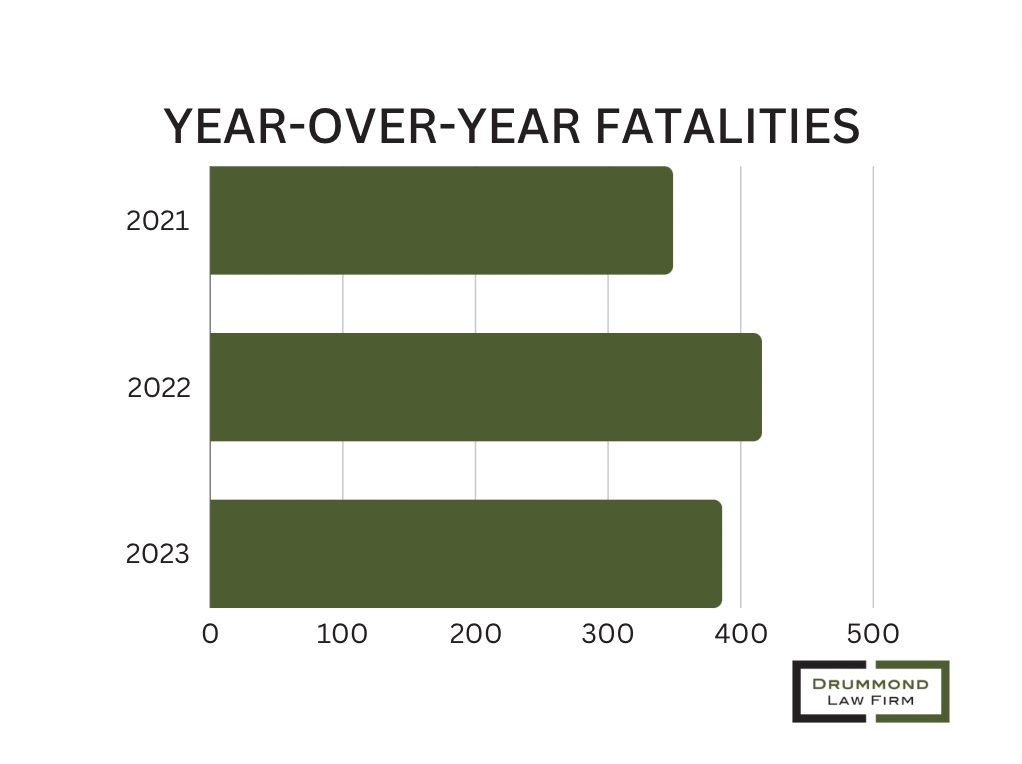
In recent months, the specter of road safety in Nevada has become an increasingly pressing concern, underscored by the disturbing frequency of motor vehicle accidents and fatalities. Reports of collisions resulting in death have transitioned from sporadic tragedies to near-daily occurrences, painting a stark picture of the current state of our roadways. In 2022 alone, Nevada witnessed 416 fatal traffic collisions, marking a significant 16% increase from the 349 fatal incidents reported in 2021. In 2023, we saw a 7% decrease at 386 crash deaths, becoming the second-deadliest year on state roads since 2006. These numbers are not just a statistic; it’s a clear signal of an escalating crisis on our roads.

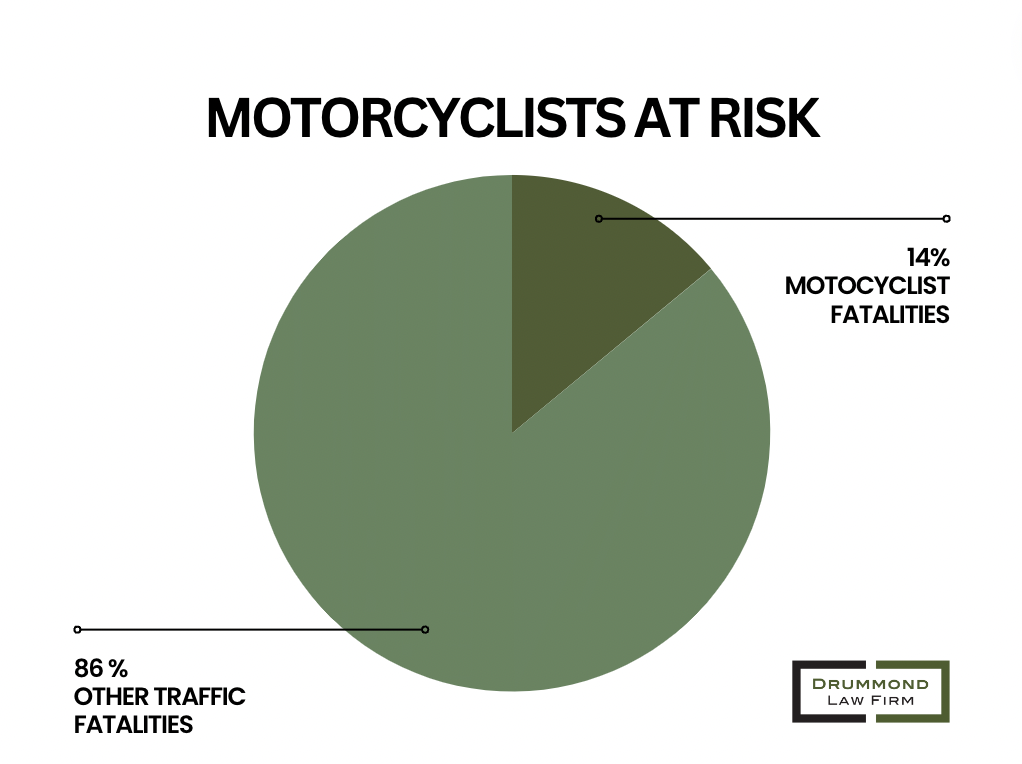
Particularly alarming is the vulnerability of motorcyclists, who face disproportionately high risks. According to the United States Department of Transportation, motorcyclists are 28 times more likely to die in a vehicle collision than passengers in cars, with 5,932 motorcyclists killed nationwide in 2021. This represented nearly 14% of all traffic fatalities for that year, a figure that underscores the critical need for targeted safety measures and awareness campaigns to protect these road users.

The impact of these tragedies extends far beyond the immediate aftermath of the collisions. Each statistic represents a life lost, a family grieving, and a community shaken. The ripple effects are profound, touching every corner of society and leaving a void that can never truly be filled. The emotional and financial toll on the victims’ families can be overwhelming, often compounded by the legal complexities that follow such incidents.

The State’s Response to Rising Traffic Concerns

In the face of the escalating crisis of traffic fatalities in Nevada, the state has taken proactive steps to combat this issue head-on. A central part of Nevada’s comprehensive strategy is the creation and promotion of the Zero Fatalities initiative. This program represents a significant commitment to eliminating road deaths and serious injuries through education, awareness campaigns, and the implementation of strategic safety measures. Zero Fatalities serves as a hub for residents and visitors alike, offering resources, safety tips, and real-time data to foster a safer driving environment across the state.

One of the pivotal moments in Nevada’s journey towards improved road safety was a meeting held on November 9, 2023, by the Nevada Department of Transportation (NDOT). This gathering was not just a routine check-in; it was a call to action, outlining a series of initiatives aimed at making Nevada’s roads safer for everyone. Key outcomes and measures discussed included:

  • Enhanced Enforcement of Speeding Laws: Recognizing that speed is a leading factor in fatal accidents, there has been a significant increase in speeding citations. This effort aims to deter reckless driving and encourage adherence to speed limits.
  • Intersection Safety Improvements: Intersections are hotspots for vehicle collisions. NDOT has committed to making intersections safer through better signage, enhanced signal timings, and the introduction of more roundabouts to reduce collision points.
  • Expansion of Climbing and Passing Lanes: To alleviate the dangers posed by slow-moving vehicles and unsafe passing, the state is increasing the number of climbing and passing lanes on key highways. This move is designed to improve traffic flow and reduce incidents of road rage and risky overtaking maneuvers.
  • Work Zone Safety Enhancements: Construction zones are potential sites for accidents due to the unexpected conditions they present. NDOT is ramping up efforts to make work zones safer through better signage, clearer lane markings, and increased visibility of construction workers and equipment.

These initiatives, among others discussed at the meeting, are part of a broader, multi-faceted approach to road safety. By addressing speed, infrastructure, and driver behavior, Nevada aims to create a road network that minimizes risks and protects its users.

The outcomes of these efforts are promising. Preliminary data suggests a decrease in the number of accidents in targeted areas, showcasing the positive impact of these measures. However, the true measure of success lies in the sustained reduction of traffic fatalities and injuries over time.

The Role of Individuals in Ensuring Road Safety

While state initiatives and measures are crucial in the quest for safer roads, the responsibility does not rest with the authorities alone. Each of us, as drivers, pedestrians, and community members, plays a pivotal role in ensuring the safety of our roads. The collective actions of individuals can have a profound impact on reducing accidents and fatalities. As we navigate Nevada’s roadways, embracing a culture of safety and responsibility is paramount.

Safe Driving Practices

  • Stay Alert: Distractions are a leading cause of accidents. Always keep your focus on the road and avoid using mobile devices, eating, or any other activity that diverts your attention while driving.
  • Obey Speed Limits: Speeding is a significant contributor to road accidents. Adhering to speed limits not only reduces the risk of accidents, but also gives you more time to react to unforeseen incidents.
  • Use Signals: Communicate your intentions to other drivers by using turn signals well in advance of making a turn or changing lanes. This simple act can prevent misunderstandings and collisions.
  • Keep a Safe Distance: Tailgating increases the risk of rear-end collisions. Maintaining a safe following distance allows for adequate reaction time in case the vehicle ahead stops suddenly.
  • Never Drive Under the Influence: Alcohol and drugs impair judgment and reaction times. Always choose a designated driver or use alternative transportation if you’ve been drinking or using substances.

Sharing the Road with Vulnerable Users

  • Watch for Motorcyclists: Motorcycles are smaller and can be harder to see. Double-check blind spots and give motorcyclists a full lane width for safety.
  • Yield to Pedestrians: Pedestrians have the right of way in crosswalks. Always stop for pedestrians and remain stopped until they have safely crossed.
  • Be Cautious Around Bicyclists: Bicycles are entitled to share the road. When passing, leave at least three feet of space between your vehicle and the bicyclist.
  • Respect Commercial and Public Transportation Vehicles: Large vehicles have blind spots and require more time to stop. Give them ample space and avoid cutting them off.

Legal Recourse for Victims of Traffic Accidents

The aftermath of a traffic accident can be overwhelming, especially when it involves injuries or, worse, fatalities. Victims of such incidents often find themselves facing not just physical and emotional recovery, but also the daunting prospect of navigating the legal complexities that follow. Understanding your rights and the steps to take can significantly impact the outcome of your case and your ability to secure justice and compensation.

Understanding Negligence, Recklessness, and DUI

At the heart of most legal claims following a traffic accident is the concept of negligence. A driver is considered negligent when they fail to act with the care expected, resulting in harm to another person. This can include behaviors like distracted driving, failing to yield, or running a red light. Recklessness, on the other hand, involves a willful disregard for the safety of others, such as excessive speeding or aggressive driving. Driving under the influence (DUI) of alcohol or drugs is not only a severe offense, but also a clear case of negligence, as it significantly impairs a driver’s ability to operate a vehicle safely.

Steps to Take Following an Accident

If you find yourself the victim of a traffic accident, there are several crucial steps you should take:

  1. Seek Medical Attention: Your health is the top priority. Even if you do not believe you are seriously injured, some injuries may not be immediately apparent and you should be examined by a medical professional following a collision. Additionally, a medical professional will document your injuries as the severity of certain types of injuries can increase over time.Ā 
  2. Report the Accident: File a report with the police. This document will be vital when filing a claim.
  3. Document Everything: Take photos of the scene, your vehicle, the other vehicle(s), and any visible injuries. Gather contact information from witnesses.
  4. Do Not Admit Fault: Be careful not to admit fault at the scene. Such statements can be used against you in legal proceedings. If the incident was truly your fault, there are ways to resolve the matter down the line without having to admit fault or liability.
  5. Consult a Legal Professional: Before navigating insurance claims or considering any settlement offers, consult with a legal expert who specializes in traffic accidents.

How Drummond Law Firm Can Help

The Drummond Law Firm stands as a beacon of hope and support for victims of traffic accidents in Nevada. With a deep understanding of the legal system and a compassionate approach to each case, the firm specializes in representing individuals affected by negligent, reckless, or drunk driving incidents. Here’s how we can assist:

  • Expert Legal Representation: Our attorneys possess the expertise to navigate the complexities of your case, ensuring you receive the best possible legal representation.
  • Maximizing Compensation: We are committed to securing full compensation for your injuries, including medical expenses, lost wages, pain and suffering, and more.
  • Navigating Insurance Claims: Dealing with insurance companies can be challenging. We advocate on your behalf to ensure fair treatment and adequate compensation.
  • No Upfront Costs: We offer a free consultation to discuss your case, and you pay no legal fees unless we win your case.

Victims of traffic accidents and collisions deserve justice and support. At Drummond Law Firm, we are dedicated to providing that support, offering expert legal advice and representation to ensure that you can focus on recovery while we handle the legal aspects. If you or a loved one has been affected by a traffic accident in Nevada, contact us to learn more about your rights and how we can help you navigate the path to recovery and justice.

Understanding Nevada’s Rideshare Laws: A Comprehensive Guide for Uber & Lyft Users

Rideshare services, epitomized by companies like Uber and Lyft, have seen a meteoric rise in popularity across Nevada. This surge is due to the convenience, efficiency, and often cost-effectiveness these services offer compared to traditional transportation methods. As these services become increasingly woven into the fabric of Nevada’s transportation landscape, understanding the state’s rideshare laws becomes crucial. This knowledge is vital for both drivers and passengers to ensure safe, legal, and responsible use of these services, shaping the future of urban mobility in Nevada.

Key Takeaways

  • Rise of Rideshare Services: Rideshare companies like Uber and Lyft have become increasingly popular in Nevada, offering convenience and cost-effectiveness compared to traditional transportation.
  • Regulatory Framework: Since 2015, Nevada has had specific legal frameworks for Transportation Network Companies (TNCs), covering insurance, liability, driver background checks, vehicle standards, and passenger rights.
  • Insurance Requirements: Rideshare drivers in Nevada must adhere to varying insurance requirements based on their activity status, ensuring adequate coverage during all stages of a ride.
  • Liability in Accidents: Nevada’s at-fault insurance system determines liability in rideshare accidents based on the driver’s status during the accident.
  • Comparative Negligence: Nevada employs comparative negligence rules in accidents, affecting compensation based on each party’s degree of fault.

Nevada’s Regulatory Framework for Uber, Lyft, and Other TNCs

In 2015, Nevada introduced legal frameworks specifically for Transportation Network Companies (TNCs) like Uber and Lyft, marking their official recognition and regulation within the state. These laws address various aspects unique to TNCs, such as:

  • Insurance and Liability: TNCs must adhere to specific insurance coverage requirements, ensuring adequate protection for both drivers and passengers.
  • Driver Background Checks: Strict checks, including criminal and driving history, are mandatory for all TNC drivers.
  • Vehicle Standards: Regulations specify vehicle requirements for safety and operation in the rideshare context.
  • Passenger Safety and Rights: Laws include fare transparency, anti-discrimination policies, and guidelines for protecting passenger information.

Understanding Nevada’s Rideshare Insurance Requirements

In Nevada, rideshare drivers are subject to specific insurance requirements that vary depending on their activity status. These requirements are designed to ensure adequate coverage throughout different stages of a rideshare trip, protecting both drivers and passengers.

The Different Insurance Phases in Ridesharing

Phase 1: Driver Logged In and Waiting for a Ride Request

  • In this phase, the driver is logged into the rideshare app, but hasn’t accepted a ride request yet. The insurance provided by TNCs typically covers any damages exceeding the driver’s personal insurance limits.
  • Minimum coverage in this phase includes contingent liability insurance, which covers up to $50,000 per individual per accident for injuries, and up to $25,000 for property damage.

Phase 2: Driver En Route to Pick Up a Passenger

  • Once the driver accepts a ride request and is on their way to pick up the passenger, the coverage increases significantly.
  • During this phase, Nevada law requires TNCs to provide insurance coverage of up to $1.5 million for bodily injury, death, and property damage. This ensures a higher level of protection as the driver is actively engaged in a rideshare service.

Phase 3: Passenger in the Vehicle Until Drop-off

  • This phase starts when the passenger enters the vehicle and continues until they are dropped off at their destination.
  • In this final phase, the TNC’s commercial liability policy is liable and the liability coverage must not be less that $1.5 million per accident.Ā Ā 
  • Ā This covers both bodily injury and property damage caused by the rideshare driver.

Liability in Rideshare Accidents

Understanding liability in rideshare accidents is crucial, especially in Nevada, which operates under the at-fault insurance system. This system dictates how liability is determined and who is responsible for damages in the event of a rideshare accident.

Nevada as an At-Fault State: Implications for Rideshare Accidents

In an at-fault state like Nevada, the driver who is responsible for causing the accident is also responsible for the damages. This principle applies to rideshare accidents as well. The liability in such cases often depends on several factors, including the status of the rideshare driver at the time of the accident.

Scenarios Determining Liability

  1. Accident with a Passenger Onboard
  • If a rideshare driver is involved in an accident while a passenger is onboard, the rideshare company’s insurance is typically liable. This is because the driver is considered to be “on duty”, providing a service under the company’s operation.
  • In this scenario, the commercial policy of the rideshare company, often with high coverage limits, would come into play to cover the damages.
  1. Collision While En Route to Pick Up a Passenger
  • When a rideshare driver accepts a trip and is on the way to pick up a passenger, they are also considered “on duty”. Therefore, in the case of an accident during this period, the rideshare company’s insurance usually covers the damages.
  • This coverage is crucial because it fills the gap between personal insurance coverage and the time a passenger is in the vehicle.
  1. Incidents During Personal Use by the Driver
  • If a rideshare driver is involved in an accident while not logged into the rideshare app (thus not working as a rideshare driver), their personal auto insurance is responsible for covering the damages.
  • This scenario treats the driver as a regular motorist, separate from their role as a rideshare driver.

Comparative Negligence in Nevada

Comparative negligence, also known as comparative fault, is a legal concept used in Nevada to determine the degree of fault in accidents involving multiple parties. Under this rule, each party involved in an accident can be assigned a certain percentage of fault. The key implication of this system is that it allows for the distribution of responsibility and damages based on each party’s contribution to the accident.

How Comparative Negligence Affects Compensation in Rideshare Accidents

In rideshare accidents, the comparative negligence rule plays a crucial role in deciding compensation. Here’s how it works:Ā 

  • Determining the Degree of Fault: If involved in an accident, both the rideshare driver and the other party (or parties) will be assessed to determine their respective levels of fault. This assessment is based on evidence, witness statements, and other relevant information.
  • Impact on Compensation: The compensation that a party can receive is directly affected by their degree of fault. For example, if a party is found to be 30% at fault in an accident, their compensation will be reduced by 30%. In Nevada, as long as a party is not more than 50% at fault, they can still recover damages.
  • Application in Rideshare Context: For rideshare accidents, this means that both the driver and the passenger (or other involved parties) need to consider their actions leading up to the accident. Any reckless behavior, like distracted driving or not wearing a seatbelt, can affect the fault percentage and, consequently, the compensation.

Rideshare Insurance Debate in Nevada: The Case of Bill SB 125

A recent development in Nevada’s legal landscape concerning rideshare services involved the proposed bill SB 125. This bill aimed to increase the insurance coverage required for rideshare drivers, such as those working for Uber and Lyft. However, it failed to pass during a session of the Committee on Revenue and Economic Development. The existing law in Nevada mandates that rideshare firms provide $50,000 in coverage for drivers who are working, but not yet transporting passengers.

The rejection of this bill maintains the status quo, but sparked discussions on whether the current insurance coverage is sufficient for catastrophic accidents. This development is crucial for both riders and drivers as it directly impacts the insurance coverage available in the event of an accident.Ā 

Drummond Law Firm: Your Guide to Nevada’s Rideshare LawsĀ 

At Drummond Law Firm, we understand the complexities of Nevada’s rideshare laws and their impact on your safety and legal rights. If you find yourself in a rideshare-related legal situation or need more information, Drummond Law Firm is here to help.

Comprehensive Guide to Rideshare Accident Compensation in Nevada: Know Your Rights

Whether you’re a passenger, a rideshare driver, or another party involved in a rideshare accident, this guide offers comprehensive information to help you understand your rights and the steps to take following an accident in Nevada.

Rideshare Insurance Coverage and Liability

The Three Periods of Rideshare Coverage

Navigating the insurance landscape after a rideshare accident in Nevada can be complex. It’s crucial to understand that the coverage provided by companies like Uber and Lyft varies depending on the driver’s activity at the time of the accident. This is generally divided into three distinct periods:

App Off – Personal Use

When the rideshare driver’s app is off, they are considered to be using the vehicle for personal use. In this scenario, any accident that occurs falls under the driver’s personal auto insurance policy. Uber and Lyft will most likely bear no responsibility in these instances. It’s essential to note that the insurance coverage in this period is typically the minimum liability coverage required by Nevada law, which may be as low as $25,000 per person per accident for injuries or death and only $20,000 for property damage​​​​.

App On, Waiting for a Ride Request

This period begins the moment the driver turns on their rideshare app and is waiting to accept a ride request. During this time, both Uber and Lyft offer contingent liability insurance. This means that their policy will provide coverage only after the driver’s personal insurance has been exhausted. The coverage includes up to $50,000 for injury or death per individual, up to $100,000 combined, and up to $25,000 for property damage per accident​​​​.$50,000 per personĀ 

App On, Ride Accepted

The most substantial coverage applies when a driver has accepted a trip request and during the entire duration of the ride. In this case, Uber and Lyft’s commercial insurance policies are the primary coverage providers. These policies generally offer up to $1 million in liability coverage per accident. This comprehensive coverage provides a higher degree of financial protection for both passengers and third parties potentially injured in an accident​​​​.

How Nevada’s At-Fault Laws Apply

Nevada follows an at-fault insurance system, which plays a significant role in determining liability and compensation in the event of a rideshare accident. In an at-fault system, the individual who is found to be responsible for causing the accident is also responsible for the damages. This system requires the at-fault party’s insurance to cover injuries, damages, and losses incurred by the other party involved in the accident.

In the context of rideshare accidents, this means that determining who is at fault is critical. The responsible party could be the rideshare driver, another motorist, or even a third party. In some cases, liability may be shared among multiple parties. For instance, if a rideshare driver is found to be at fault during a trip, Uber or Lyft’s insurance policy would likely be responsible for covering the damages due to their higher coverage limits during active rides. However, if the rideshare driver is not actively engaged in a ride, their personal insurance might be the primary source of coverage, with contingent coverage from the rideshare company coming into play if necessary​​.

Types of Damages Recoverable in Rideshare Accidents

Comprehensive List of Damages

Victims of rideshare accidents in Nevada may be entitled to a variety of damages, reflecting the multifaceted impact these incidents can have on one’s life. Understanding the types of compensation available is crucial for ensuring a full and fair recovery. The common types of damages recoverable include:

  • Medical Expenses: This covers all medical treatments resulting from the rideshare accident. It includes emergency room visits, hospital stays, surgeries, medications, and any other medical costs directly related to injuries from the accident. Anticipated future medical expenses, such as ongoing physical therapy or required surgeries, can also be claimed.
  • Therapy Costs: Often overlooked, therapy costs, both physical and psychological, are compensable. This can include physical therapy for bodily injuries and counseling for trauma and emotional distress caused by the accident.
  • Lost Wages and Earning Capacity: If the injuries sustained in the accident lead to time off work, victims can claim compensation for lost wages. This also extends to lost earning capacity if the injuries result in an inability to perform the same work as before the accident, leading to reduced earning potential.
  • Car Repairs: If a personal vehicle is involved and damaged in a rideshare accident, the cost of repairs or the replacement value of the vehicle can be claimed.
  • Pain and Suffering: This includes compensation for the physical pain and emotional distress suffered due to the accident. While harder to quantify, pain and suffering are significant components of the recovery process and are recognized in compensation claims.

Each case varies, and the extent of recoverable damages depends on the specific circumstances of the accident and the severity of the injuries sustained.

Wrongful Death and Rideshare Accidents

In the tragic event that a rideshare accident results in a fatality, the victim’s family may pursue a wrongful death claim. This type of claim seeks compensation for the losses incurred due to the untimely death of a loved one. The damages in wrongful death cases typically include:

  • Funeral and Burial Expenses: These are the immediate costs associated with the death of the victim.
  • Loss of Income and Benefits: This covers the loss of the deceased’s expected earnings over the course of what would have been their remaining working life. It also includes benefits like health insurance and retirement savings that the deceased would have contributed to their family.
  • Loss of Companionship and Support: Family members can claim compensation for the loss of love, companionship, comfort, guidance, and support they would have received had the victim not passed away.
  • Emotional Distress: The family can also be compensated for the emotional and psychological impact of their loss.

Comparative Negligence and Its Impact on Compensation

What is Comparative Negligence?

Comparative negligence is a legal principle used to allocate fault among multiple parties involved in an accident. In Nevada, this law allows for the distribution of responsibility among those at fault based on their respective contributions to the accident.

How Does Comparative Negligence Affect Compensation?

Under Nevada’s comparative negligence system, the amount of compensation a victim can recover is reduced by their percentage of fault in the accident. For instance, if a victim is found to be 30% responsible for an accident, the total compensation they can receive will be reduced by 30%.

Scenarios Involving Comparative Negligence

Consider a scenario where a rideshare passenger is injured because the driver was speeding, but the passenger was not wearing a seatbelt. If the passenger sues for damages, the court may find that both the driver and the passenger bear some responsibility for the injuries. The driver might be assigned 70% fault for speeding, while the passenger might be assigned 30% fault for not wearing a seatbelt. As a result, the compensation awarded to the passenger would be reduced by 30%.

Important Points to Note

  • Limitation: In Nevada, if a victim is found to be more than 50% responsible for the accident, they cannot recover any compensation.
  • Role in Insurance Claims: Insurance companies often assess comparative negligence when settling claims. They may offer lower settlements if they believe the claimant shares a significant portion of the blame.
  • Legal Representation: Given the complexities of proving fault and negotiating with insurance companies, legal representation becomes essential in cases involving comparative negligence.

Overcoming Legal and Insurance Challenges

Legal Complexities in Rideshare Accidents

Rideshare accidents in Nevada bring forth a set of unique legal challenges, primarily due to the involvement of multiple parties and the intricate interactions between various insurance policies. Understanding these complexities is key to effectively navigating the aftermath of such an incident.

Multi-Party Liability

One of the primary complexities in rideshare accidents is determining liability among multiple parties. This could include the rideshare driver, the rideshare company, other involved drivers, vehicle manufacturers, and even mechanics or service providers. Each party may have varying degrees of responsibility depending on the specifics of the accident. Identifying and proving liability in such a scenario requires an intricate understanding of both state traffic laws and the specific policies of the rideshare companies.

Insurance Interactions

Another layer of complexity is the interaction between different insurance policies. This includes the personal insurance of the rideshare driver, the commercial insurance provided by the rideshare company, and possibly third-party insurance policies. The applicable insurance coverage can vary based on the driver’s status at the time of the accident – whether they were logged into the app, waiting for a ride request, or actively transporting a passenger. Navigating through these overlapping insurance policies to determine which is liable for damages is a task that typically requires legal expertise.

Strategies for Dealing with Insurance Companies

Dealing with insurance companies after a rideshare accident can be daunting. Insurance providers often employ various tactics to minimize payouts. Understanding these tactics and knowing how to negotiate effectively can significantly impact the compensation you receive.

Common Insurance Company Tactics

  • Initial Lowball Offers: Insurance companies may initially offer a settlement that is lower than the claim’s worth, expecting victims to accept quickly, especially when facing financial pressure.
  • Disputing Liability: They may dispute their policyholder’s liability or argue that the victim’s negligence contributed to the accident, aiming to reduce their payout.
  • Delay Tactics: Delays in processing claims can be used to pressure victims into accepting lower settlements.

Negotiation Tips

  • Understand the Full Extent of Your Damages: Before negotiating, ensure you have a comprehensive understanding of all your damages – physical, emotional, and financial.
  • Do Not Accept the First Offer: First offers are often lower than what you may be entitled to. It’s usually beneficial to negotiate for a better settlement.
  • Documentation is Key: Gather all necessary documentation, including medical records, police reports, and evidence of lost wages, to strengthen your claim.
  • Seek Legal Advice: Consider consulting with a legal professional who has experience dealing with insurance companies and rideshare accident claims. They can provide valuable guidance and take over the negotiation process, ensuring your rights are fully protected.

The Crucial Role of Legal Representation

Why Legal Expertise Matters

In the complex world of rideshare accident claims in Nevada, the importance of legal expertise cannot be overstated. Having a knowledgeable attorney can make a significant difference in navigating the intricacies of the law, securing fair compensation, and effectively handling negotiations.

Navigating Legal Complexities

The legal landscape surrounding rideshare accidents involves multifaceted issues such as determining liability, understanding the nuances of insurance policies, and applying state laws like Nevada’s comparative negligence rule. An experienced attorney can adeptly navigate through these complexities, ensuring that all aspects of the case are thoroughly examined and addressed.

Securing Fair Compensation

Victims of rideshare accidents often face the challenge of dealing with well-equipped insurance companies that are adept at minimizing payouts. Legal professionals have the expertise to accurately assess the value of a claim, considering all possible damages, from medical expenses and lost wages to pain and suffering. They ensure that victims receive fair compensation that fully addresses their losses.

Effective Negotiation and Advocacy

Attorneys are skilled negotiators who can effectively communicate with insurance companies, opposing lawyers, and other relevant parties. Their advocacy ensures that the victim’s rights are protected and their interests are vigorously represented, whether in out-of-court settlements or, if necessary, in court proceedings.

Securing Your Rights and Compensation with Drummond Law Firm

If you or a loved one are navigating the aftermath of a rideshare accident, it’s crucial to have an experienced legal team by your side. At Drummond Law Firm, we specialize in handling rideshare accident claims and are committed to ensuring that our clients receive the compensation and justice they deserve. Our team of dedicated legal professionals is ready to provide you with the support, guidance, and representation necessary to make your recovery process as smooth and successful as possible.

Don’t navigate this complex process alone. Contact Drummond Law Firm today for a consultation and take the first step towards securing your rights and the compensation you are entitled to.

How a Skilled Rideshare Attorney in Nevada Can Transform Your Legal Claim

It might seem on the surface that all lawyers have the same expertise, but when it comes to rideshare accidents, having an attorney who is deeply familiar with this niche can significantly alter the outcome of your case. This is particularly true in Nevada, where the landscape of rideshare law is as complex as it is unique.Ā 

Let’s delve into how partnering with a seasoned legal expert can transform your claim, ensuring that you navigate the complexities of rideshare accidents with ease and secure the compensation you deserve.

How Rideshare Accidents Differ from Other Vehicular Accidents

Status of Drivers as Independent Contractor

Unlike traditional vehicular accidents, rideshare accidents involve a multi-layered relationship between drivers, the rideshare company, and passengers. The classification of rideshare drivers as independent contractors rather than employees shields companies like Uber and Lyft from direct liability under many circumstances. This classification impacts the insurance claims process and the strategies for pursuing compensation for injuries and damages. In traditional employee-employer relationships, the company would more directly bear the liability for accidents caused by their employees. However, in the rideshare industry, the responsibility often shifts to the individual driver’s personal insurance or the additional insurance provided by the rideshare company, depending on the driver’s operational status at the time of the accident.

Involvement of Multiple Insurance Policies

Rideshare accidents are further complicated by the layered insurance policies in place. Uber and Lyft provide varying levels of insurance coverage based on whether the driver is waiting for a ride request, en route to pick up a passenger, or actively transporting a passenger. These stages include:

  • Offline or the App is Off: The driver’s personal insurance is the primary coverage.
  • App On, Waiting for a Request: Both companies offer limited liability coverage if the driver’s personal insurance does not apply.
  • En Route to Pick Up Passengers and During Trips: The rideshare company’s commercial insurance policy, which includes $1 million in liability coverage, becomes primary.

The Role of an Experienced Rideshare Attorney

  1. Thorough Investigation and Documentation

One of the first steps an experienced attorney will take is to conduct a detailed investigation of the accident. This includes gathering all relevant evidence, such as police reports, witness statements, and surveillance footage, to build a strong case. Proper documentation of the victim’s injuries and how they have impacted their life is also crucial for substantiating the claim.

  1. Understanding Insurance Policies

Skilled attorneys have an in-depth understanding of the insurance policies of rideshare companies and how they interact with personal insurance policies. They use this knowledge to ensure that claims are filed correctly and that all potential sources of compensation are explored.

  1. Effective Communication and Negotiation

Effective negotiation with insurance companies is a key strategy used by attorneys. They know how to communicate with adjusters, present evidence compellingly, and argue the merits of the case to secure the best possible settlement for their clients. Attorneys are also prepared to counteract common tactics used by insurance companies to undervalue claims.

  1. Legal Pressure and Litigation

When necessary, attorneys will apply legal pressure on insurance companies. This can involve filing a lawsuit, which signals to the insurer that the attorney is prepared to go to trial if a fair settlement is not offered. The possibility of litigation, with its associated costs and risks for the insurance company, often motivates insurers to offer a more reasonable settlement.

  1. Patient and Persistent Advocacy

Experienced attorneys understand that the process can be lengthy and require persistence. They advocate tirelessly on behalf of their clients, ensuring that their rights are protected throughout the negotiations and that the insurance companies fulfill their obligations.

Understanding the Statute of Limitations in Nevada for Rideshare Accidents

The statute of limitations is a critical legal principle that sets the maximum time after an event within which legal proceedings may be initiated. In the context of rideshare accidents in Nevada, understanding the statute of limitations is essential for ensuring that victims take timely legal action to secure their rights to compensation.

Statute of Limitations in Nevada

In Nevada, the statute of limitations for personal injury claims, including those arising from rideshare accidents, is generally two years from the date of the accident. This means that if you’re involved in a rideshare accident, you have two years from the date of that accident to file a lawsuit against the responsible parties. This timeframe applies to claims for injuries sustained by passengers, pedestrians, or other drivers in accidents involving rideshare vehicles like Uber and Lyft.

Importance of Timely Legal Action

The statute of limitations is a firm deadline, and failing to file a lawsuit within this period typically results in losing the right to seek compensation through the court system. Here are several reasons why timely legal action is crucial:

  • Preservation of Evidence: Over time, evidence that is crucial to proving your case can become harder to obtain. Witnesses may forget important details, or physical evidence may be lost or destroyed. Acting quickly ensures that evidence is preserved and that your legal team can build the strongest case possible.
  • Access to Compensation: Filing a claim within the statute of limitations ensures that you maintain your right to seek compensation for your injuries, including medical expenses, lost wages, pain and suffering, and other damages resulting from the accident.
  • Avoiding Legal Barriers: By adhering to the statute of limitations, you avoid the risk of having your case dismissed on procedural grounds. This adherence demonstrates a commitment to pursuing your legal rights and can be crucial in negotiations with insurance companies.

Drummond Law Firm: Expert Advocacy for Rideshare Accident Claims in Nevada

Navigating the complexities of rideshare accidents in Nevada requires the expertise of a seasoned attorney, given the unique legal and insurance challenges these cases entail. The Drummond Law Firm specializes in providing comprehensive legal guidance through this intricate landscape, ensuring victims receive the compensation they deserve. With a commitment to excellence and a deep understanding of rideshare litigation, we stand ready to advocate for your rights.

If you’ve been involved in a rideshare accident, don’t face this daunting process alone. Contact the Drummond Law Firm for a consultation, and let our experienced team support you in securing the justice and compensation you are entitled to.

Injured in a Rideshare Accident? 4 Essential Steps for Passengers

At Drummond Law Firm, we’re committed to guiding you through the aftermath of a rideshare accident. Understanding these steps in the aftermath of an accident is key to protecting your rights and interests following an accident. With our expertise in personal injury and rideshare cases, we’re here to help you navigate this challenging time.

Table of Contents

Introduction

1. Immediate Actions After an Accident
Calling for Medical Help
Contacting the Police
Documenting the Scene

2. Reporting the Accident
To Police & Rideshare Company
In-App Reporting Process

3. Legal Considerations and Rights
Understanding Potential Liability
Legal Options AvailableSeeking
Legal Advice

4. Dealing with Insurance Companies
Interacting with Other Driver’s Insurance
Using Personal Insurance Policy
Common Injuries in Rideshare Accidents

Conclusion

1. Immediate Actions After an Accident

Call for Medical Help

Your safety and well-being are paramount. In the unsettling moments following a rideshare accident, it’s vital to first assess any injuries. Remember, some injuries, especially internal ones, might not be immediately obvious due to shock or adrenaline. Prioritize calling for medical assistance if you or anyone else involved in the accident shows signs of injury.

Even in cases where no one feels hurt, it’s wise to seek a medical evaluation. Some injuries can be subtle and only become apparent hours or even days later. Timely medical attention is not just crucial for health, but it also creates an official record of any injuries, which can be important later on.

Contact the Police

After ensuring everyone’s safety, your next step should be to contact the police. Having law enforcement at the scene is crucial. They will create an official accident report, which becomes a critical document for insurance and legal purposes. This report provides an objective account of the accident, documenting details that you might overlook in the chaos. It’s important to cooperate fully with the police, providing them with any information they need to accurately record the event.

Document the Scene

While waiting for the police and medical help, if you’re able, take this time to document the accident scene. Use your phone to take clear photographs of the vehicles involved, focusing on areas of damage. Don’t forget to capture wider shots of the accident scene, including road conditions, traffic signs, and any other relevant details.

Also, if there are visible injuries, photograph them as well. Additionally, jot down key details like the time, location, and how the accident happened. If there are witnesses, gather their contact information. Take screen-shots of the rideshare application with all of your trip information, including the driver’s name, route, and fare. Gathering and preserving as much documentation that you can is invaluable for insurance claims and any legal proceedings that may follow.

2. Reporting the Accident

To Police & Rideshare Company

After attending to immediate safety concerns and documenting the accident scene, your next crucial step is to report the accident. This involves notifying not just the police, but also the rideshare company involved. Reporting to the police should already be in progress if they were called to the scene. Ensure you obtain a copy of the police report or note the report number, as this document is vital for insurance claims and any legal matters that may arise.

Additionally, it is equally important to inform the rideshare company about the accident. Rideshare companies like Uber and Lyft have specific protocols for accidents involving their drivers. This step is not just about fulfilling a requirement; it’s about ensuring that all parties are aware of the incident and can take appropriate measures.

In-App Reporting Process

Most rideshare companies have made it convenient to report accidents directly through their mobile apps. This in-app reporting is a critical step in the aftermath of an accident for several reasons. Firstly, it provides a formal and immediate way to inform the company about the incident. In the app, you’ll usually find a section dedicated to reporting accidents or safety concerns. Here’s how you can navigate this process:

For Uber:

  1. Open the Uber app and go to the menu.
  2. Tap on ‘Your Trips’ and select the trip during which the accident occurred.
  3. Choose ‘Help’ or ‘Report an issue’ and then ‘I was involved in an accident.’*
  4. Fill in the details of the accident as accurately as possible. This typically includes the date, time, location, a brief description of the incident, and any injuries or damages.
  5. Attach any relevant photos or documents, such as images of the accident scene or your injuries.

For Lyft:

  1. Open the Lyft app and navigate to the ride history.
  2. Select the ride where the incident occurred.
  3. Tap on ‘Get Help’ or a similar option and follow the prompts to report an accident.*
  4. Fill in the details of the accident as accurately as possible. This typically includes the date, time, location, a brief description of the incident, and any injuries or damages.
  5. Attach any relevant photos or documents, such as images of the accident scene or your injuries.

*These steps are a general guide and may vary slightly depending on the app’s version or updates. It’s always good to check the latest app instructions or the help section of these companies for the most current information.

The significance of using the in-app reporting feature lies in its efficiency and immediacy. It ensures that your report is logged correctly and quickly, which is crucial for any subsequent insurance or legal processes. It also helps the rideshare company to take immediate steps, whether it’s to support you or to take actions regarding the involved driver.

3. Legal Considerations and Rights

Understanding Potential Liability

Determining liability in rideshare accidents can be a complex process due to the involvement of multiple parties. The rideshare driver, their personal insurance, the rideshare company’s insurance, and other drivers or entities could all play a role in the liability equation. The key factor is often the rideshare driver’s status at the time of the accident: Were they logged into the app and actively engaged in a ride? The answers to these questions can significantly impact who is deemed responsible.

It’s also important to understand that rideshare companies often classify their drivers as independent contractors, which can influence how liability is determined. This distinction can affect how claims are handled and which insurance policies are applicable. The specifics of each incident play a critical role in untangling these liability issues.

Legal Options Available

If you’re injured in a rideshare accident, you have several legal options. These might include filing a personal injury claim, pursuing a lawsuit against responsible parties, or both. Personal injury claims can provide compensation for medical expenses, lost wages, and pain and suffering. The nature of your claim will depend on the severity of your injuries and the circumstances of the accident.

In some cases, filing a lawsuit may be the best course of action, particularly if the insurance claims do not cover all your damages or if there is a dispute over liability. Lawsuits in rideshare accidents can be directed against the driver, the rideshare company, or other involved parties, depending on the specifics of the case.

Seeking Legal Advice

Given the complexities involved in rideshare accidents, it’s crucial to seek legal advice from attorneys (like the team at Drummond!) who specialize in personal injury and understand the nuances of rideshare-related incidents. We can help you navigate the often confusing terrain of insurance policies, liability determinations, and legal claims in addition to guidance on the strength of your case, the likelihood of a favorable outcome, and the best path forward based on your specific situation.

Remember, the earlier you consult a legal professional, the better. We can help in preserving evidence, advising on communication with insurance companies, and ensuring that your rights are fully protected throughout the process.

4. Dealing with Insurance Companies

Interacting with Other Driver’s Insurance

If you’re involved in a rideshare accident, you might be contacted by the other driver’s insurance company. It’s important to exercise caution in these interactions. Speaking with the other party’s insurance without legal advice can potentially harm your case. Insurance adjusters are skilled at getting information that may later be used to minimize your claim. Therefore, it’s advisable to consult with a legal professional before engaging in any discussions or negotiations.

Additionally, you might be presented with documents such as liability waivers or settlement offers. Signing any document without understanding its full implications can be detrimental. As an attorney, we can review these documents to ensure your rights are not being compromised and that you’re receiving a fair deal.

Using Personal Insurance Policy

Utilizing your personal auto insurance policy for compensation after a rideshare accident is an option, but it comes with certain limitations. If you have Personal Injury Protection (PIP) or MedPay as part of your insurance, you can file a claim for medical expenses regardless of who was at fault. This can be especially useful for immediate medical costs.

However, your personal insurance might not cover all the damages, especially if your injuries are severe or if there are significant property damages. In such cases, you may need to seek compensation through the at-fault driver’s insurance or the rideshare company’s insurance. The specifics of your coverage and the accident circumstances will dictate the most appropriate course of action.

Common Injuries in Rideshare Accidents

Rideshare accidents, much like any vehicle collisions, can result in a range of injuries. Here are some typical injuries that passengers may sustain in rideshare accidents:

  • Whiplash and Neck Injuries: Often occurring in rear-end collisions, these injuries can range from mild discomfort to severe, chronic pain.
  • Head Injuries and Traumatic Brain Injuries (TBIs): These can vary from mild concussions to severe brain damage, depending on the impact. Symptoms might not be immediately evident and can develop over time.
  • Broken Bones and Fractures: The impact of a collision can lead to broken limbs, ribs, and other fractures, which are usually evident immediately after the accident.
  • Spinal Cord Injuries: These injuries can have serious consequences, including partial or full paralysis. They may not always be immediately obvious post-accident.
  • Cuts and Lacerations: Broken glass or metal can cause these injuries, which may require stitches and can pose a risk of infection.
  • Internal Injuries: These are particularly dangerous because they can go unnoticed without medical examination, yet can be life-threatening.
  • Psychological Trauma: Accidents can leave lasting psychological effects like PTSD, anxiety, or depression, which are as significant as physical injuries.

As mentioned previously, it is important to seek medical attention immediately after an accident, even if you feel fine. Some injuries take time to manifest, and early diagnosis can significantly affect the outcome. Furthermore, medical records play a crucial role in any legal claim for compensation, as they provide evidence of the injuries sustained due to the accident.

Seek Expert Legal Help After a Rideshare Accident with Drummond Law Firm

If you find yourself in the aftermath of a rideshare accident, it’s crucial to understand the right steps to take. At Drummond Law Firm, we specialize in navigating the complexities of such cases. Our expertise in personal injury and rideshare accident law means we’re well-equipped to guide you through this challenging time. Don’t face this situation alone. Reach out to Drummond Law Firm for comprehensive legal support and ensure your rights are fully protected. We’re here to help you secure the compensation and justice you deserve.

Add to cart