Las Vegas sees more personal injury cases than most cities its size, and the reasons go beyond population. Over 40 million visitors pass through Clark County every year, and heavy traffic, round-the-clock entertainment, and extreme desert heat put more people at risk of preventable injuries than in most American cities.
If you were injured in one of the most common accidents in Las Vegas, understanding the type of case you have is the first step toward recovering compensation. This guide covers the most common personal injury cases in Las Vegas and explains what makes each one more likely to happen here than anywhere else.
Car and Truck Accidents
Car accidents are the single largest source of personal injury claims in Las Vegas and across Nevada. Clark County recorded 268 fatal crashes in 2023, a 12 percent increase over the prior year.
The numbers reflect a combination of factors that are specific to this region: high-speed arterials cutting through residential neighborhoods and tourist drivers unfamiliar with local road layouts. A nightlife culture that puts more impaired drivers on the road after midnight than most cities see in a week adds another layer of risk.
Truck accidents on I-15 and US-95 produce some of the most severe injuries because of the weight difference between a commercial vehicle and a passenger car. These cases often involve multiple liable parties, including the truck driver, the trucking company, and the vehicle maintenance provider.
Insurance coverage in truck accident cases is typically higher than in standard car crashes, but so is the complexity of proving fault.
When another driver’s negligence causes a collision, the injured party can file a claim for medical expenses, lost wages, pain and suffering, and in some cases punitive damages.
Premises Liability and Slip and Fall Injuries
Premises liability is the second most common category of personal injury claim in Las Vegas, driven largely by the volume of foot traffic that moves through casinos, hotels, resorts, and retail spaces every day. With tens of millions of visitors moving through these properties every year, the physical infrastructure is in constant use.
Spilled drinks on casino floors, wet pool decks, broken escalators, uneven walkways, and poorly maintained hotel hallways all create conditions where slip and fall injuries happen regularly.
Under Nevada law, property owners owe visitors the highest duty of care when those visitors are on the premises for the owner’s commercial benefit. A casino that ignores a recurring leak near the gaming floor and a hotel that lets a broken handrail go unrepaired for weeks have both breached that duty. The standard is not perfection, but it does require active inspection and reasonable response.
These cases often come down to how quickly the property owner knew or should have known about the hazard. Surveillance footage timestamps, maintenance logs, and employee incident reports are the primary evidence your attorney uses to establish that the owner had enough time to act and failed to do so.
When the stakes are high, you need an attorney who’s already been tested under pressure.
Pedestrian Accidents
Pedestrian accidents in Las Vegas are among the deadliest in the country. Clark County consistently ranks as one of the most dangerous metro areas for people on foot, and the reasons are structural.
The Strip’s wide, multi-lane boulevards were designed to move vehicle traffic at high speeds, and the crosswalk systems that serve pedestrians are often complex, poorly timed, or separated by long distances that encourage jaywalking.
Impaired and distracted drivers account for a significant share of pedestrian fatalities, but the road design itself plays a role that most cities do not share. Many of the highest-risk corridors run through areas where tourists are walking between casinos, restaurants, and entertainment venues at all hours.
The result is that fast-moving vehicles and pedestrians share the same corridors in ways that other cities prevent through zoning and infrastructure.
When a driver strikes a pedestrian, the injuries are almost always severe. Broken bones, spinal damage, traumatic brain injuries, and fatalities are common outcomes.
The driver’s auto insurance policy is the primary source of compensation, but if the accident occurred on private property or in a crosswalk controlled by a commercial property owner, a premises liability claim may also apply.
Assault and Negligent Security
Assault injuries tied to negligent security are uniquely common in Las Vegas. A nightlife culture built on 24-hour alcohol service and entertainment venues that pack thousands of people into enclosed spaces set the stage. A population that turns over with every flight means the people involved in these confrontations are often visitors with no local ties.
Bars, nightclubs, casinos, and parking structures are the most common locations for these incidents.
What many victims do not realize is that an assault gives rise to two separate legal claims. One targets the person who committed the attack. The other targets the property owner who failed to provide reasonable security measures to prevent it.
Because most attackers have no assets or insurance, the property owner’s commercial liability policy is typically where the real compensation comes from. Prior incidents on the property, inadequate security staffing, and missing surveillance systems all support a negligent security claim.
A civil assault claim operates independently from the criminal case. You can file a lawsuit regardless of whether the attacker is arrested, charged, or convicted. The burden of proof in a civil case is lower than in a criminal prosecution, which means a civil claim can succeed even when the criminal case does not produce a conviction.
Medical Malpractice
Medical malpractice claims arise when a healthcare provider’s negligence causes injury to a patient. Surgical errors, misdiagnosis, delayed treatment, medication mistakes, and birth injuries are the most common types in Las Vegas.
The city’s rapid population growth has strained its healthcare infrastructure, and the resulting staffing pressures contribute to conditions where errors are more likely to occur.
Nevada imposes specific procedural requirements on medical malpractice cases that do not apply to other personal injury claims. Before filing a lawsuit, the plaintiff must submit a medical expert affidavit confirming that the provider’s conduct fell below the accepted standard of care.
This requirement filters out claims that lack medical support but also adds cost and complexity that make experienced legal representation essential.
Nevada also caps non-economic damages in medical malpractice cases at $350,000 under NRS 41A.035. That cap does not apply to economic damages like medical expenses and lost wages, which can be recovered in full.
The cap makes it especially important to document every financial loss from the outset, since the non-economic recovery has a ceiling that other personal injury cases do not face.
The only Nevada personal injury firm with a federally trademarked Reduced Fee Guarantee.®
Rideshare and Taxi Accidents
Rideshare and taxi accidents are a growing category of personal injury claims in Las Vegas and throughout Clark County.
The city’s tourism economy generates one of the highest ride volumes in the country, with millions of Uber and Lyft trips originating from the airport, the Strip, and Downtown every year. That volume, combined with drivers who are often working long hours across unfamiliar routes, produces a steady rate of collisions.
Liability in a rideshare accident depends on whether the driver was logged into the app, actively transporting a passenger, or driving between rides at the time of the crash. When a driver is carrying a passenger, both Uber and Lyft carry $1 million liability policies that apply to the accident.
When the driver is logged in but waiting for a ride request, the coverage drops significantly.
Sorting out which policy applies and at what level requires an attorney who has handled rideshare claims before.
Taxi accidents in Las Vegas follow standard motor vehicle liability rules, but the taxi company’s commercial insurance policy typically provides higher coverage limits than a personal auto policy. In both rideshare and taxi cases, the injured party can file a claim against the driver, the company, or both depending on the circumstances.
Dog Bites
If a dog bites you in Las Vegas, the law does not automatically hold the owner liable. Nevada follows a modified version of the one-bite rule, which means the owner is not responsible for a first bite unless there is evidence they knew the dog was dangerous or failed to take reasonable precautions to control it.
That standard shifts the focus of a dog bite case to the owner’s conduct. An owner who allows a dog with a history of aggression to roam unleashed in a public park, or who fails to secure a gate that the dog has escaped through before, has acted negligently.
Clark County leash laws require dogs to be restrained in public areas, and a violation of those ordinances strengthens the negligence argument by establishing that the owner broke a specific rule designed to prevent the exact type of harm that occurred.
Dog bite injuries range from minor puncture wounds to disfiguring facial lacerations, crushed hand bones, and infections that require hospitalization. Children and older adults are the most frequent victims.
Homeowner’s insurance and renter’s insurance policies typically cover dog bite liability, which means compensation is available even when the owner has limited personal assets.
What Every Las Vegas Personal Injury Case Has in Common
Regardless of the type of accident, every personal injury case in Nevada requires proof that someone else’s negligence caused your injury. Negligence means the responsible party had a duty to act with reasonable care, failed to meet that duty, and their failure directly caused the harm you suffered.
That framework applies equally to a car accident on I-15, a slip and fall inside a casino, and an assault outside a nightclub.
Nevada follows a modified comparative negligence rule under NRS 41.141. If the person or entity you are suing argues that you share some of the fault, and a jury agrees, your recovery is reduced by your percentage of responsibility. If your fault exceeds 50 percent, you are barred from recovering any compensation at all.
Insurance companies raise comparative negligence arguments in virtually every case, which is why documenting the facts of the incident immediately after it happens is so important. A personal injury lawyer in Las Vegas can handle that process while you focus on your medical recovery.
Nevada gives you two years from the date of your injury to file a personal injury lawsuit under NRS 11.190(4)(e). Claims against government entities require a formal Notice of Claim within 180 days. Once either deadline passes, the court will dismiss your case.
The two-year window may feel generous, but building a strong claim takes time, and evidence deteriorates quickly in a city where surveillance footage is overwritten and witnesses leave town after their visit.
When Should You Contact a Personal Injury Lawyer?
Not every injury requires an attorney, but certain situations make legal representation essential.
You should contact a personal injury lawyer if your injuries require medical treatment beyond a single emergency room visit or if the insurance company disputes liability. Cases involving multiple liable parties or settlements that do not cover your full losses also benefit from early legal representation.
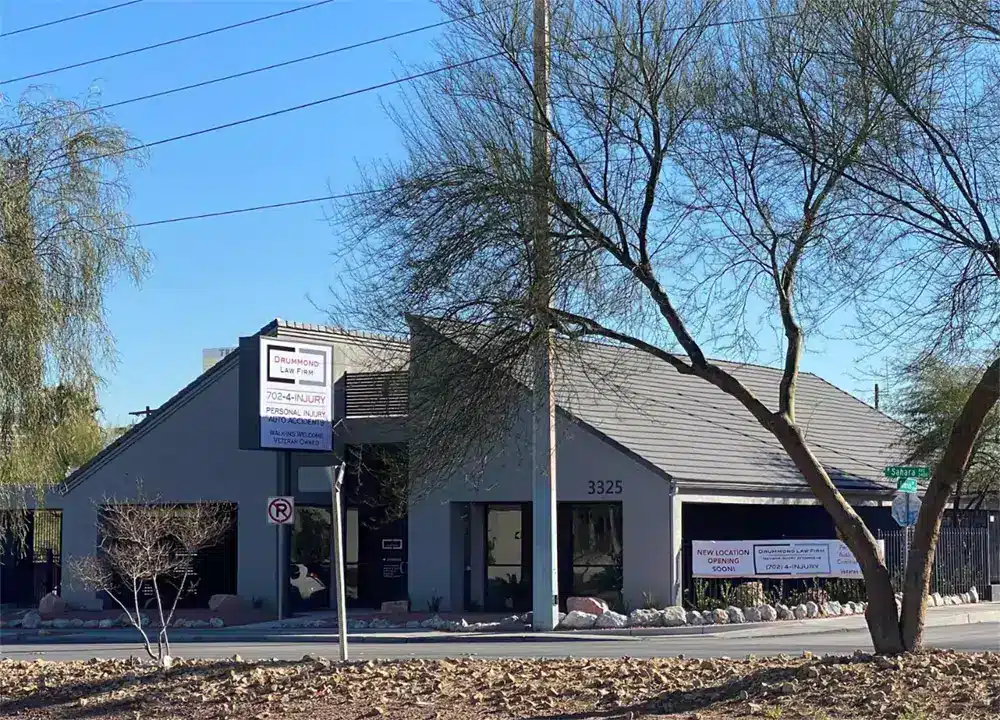
Attorney Craig Drummond, a former U.S. Army Captain and Bronze Star recipient, brings more than 15 years of trial experience to personal injury cases throughout Las Vegas and Clark County. His team has recovered tens of millions of dollars for clients across Nevada. Drummond Law Firm handles car accidents, premises liability, negligent security, pedestrian accidents, assault injuries, and every other case type discussed in this guide.
The firm’s Reduced Fee Guarantee® ensures the attorney fee will not exceed the client’s net recovery, and you will not pay a fee unless the firm wins your case. Call (702) 366-9966 for a free consultation to discuss your situation and find out whether you have a claim worth pursuing.