Fiery Crash Leaves Two Men Dead in Las Vegas

As a car accident lawyer in Las Vegas, I see a growing number of high-profile fatal accidents.  Las Vegas may be known as Sin City or the fun capital of the world but it can also be a dangerous place to drive.  The combination of massive quantities of alcohol, very little sleep, and non-stop parties leaves a lot of visitors and residents in no condition to drive home.  Unfortunately, this held true on New Year’s Eve when two men died in a car crash on I-15.

News 3 Las Vegas Reported that Only One Car Was Involved in the Accident

The driver was reported to have hit the median, crossed all lanes, and then continued to roll as it went down the highway.  They were driving a Nissan Z and the car promptly caught on fire once it came to a stop.  This all happened around 10 pm on New Year’s Eve and, as a result, the passenger, Darren Tongol Thomas, and driver, Jacob Alan Varner, died.  They were both in their early twenties.

Response from State Troopers

In response to the accident, NHP Trooper Loy Hixson said, “When a vehicle is traveling at a high rate of speed a lot of times the result we will see is a fire because the gas tank is ruptured because of so much force or energy that gets redirected.”  While this accident stands out for the severity of it, this is only one of the many fatalities in 2015.  When talking about them, Trooper Hixon expressed frustration over how many lives have been lost saying, “These are families are now broken.”

The Numbers

There were more fatal car accidents in 2015 than in 2014, an alarming trend that no one wants to see repeated in 2016 so it is important to practice defensive driving and to stay alert at all times.  Texting, talking on your cell phone, driving while tired or distracted can all increase the likelihood of you becoming another accident victim.

Victim’s Rights

In cases where only one vehicle is involved in a crash, there is typically no way to recover damages since the driver is usually negligent or responsible for the accident that happened in the first place.  However, an investigation should always be conducted to determine what really caused the wreck.  There have been single vehicle accidents caused by a vehicle malfunction or by road conditions. If you were in an accident like that, you could have the opportunity to collect financial damages.  In this particular accident, NHP Troopers believe that it was caused by him making a lane change while driving too fast to maintain control.  Still, accident victims and their families should always take the time to investigate, research, and speak with a car accident attorney in Las Vegas.

Give a Warning

Do you know anyone that likes to drive too fast?  If so, share this blog post as a friendly reminder of how important it is to drive safely.
Prepare for Winter Driving Conditions as You Head Into the Mountains

As a car accidents lawyer in Las Vegas, most of the accidents I deal with happen in the city or outlining areas.  With year-round warm weather, most of these accidents have nothing to do with bad weather conditions but instead are caused by things like distracted or reckless driving.  However, just because Las Vegas has warm or mild weather, does not mean that Nevadans are safe from winter storms and the bad roads that come with them.  If you are planning on driving into the mountains or taking a short road trip, you should be prepared for the bad weather and how to safely drive in it.

Safe Driving Tips from a Car Accidents Lawyer in Las Vegas

  • Check the weather. A quick look at the weather report can save you a lot of time and headaches.  Before you head into the mountains, look to see whether you will be driving into a snow or ice storm.  If you are, it is best to delay your trip temporarily until the worst of the storm has passed and the road crews have had the opportunity to go to work clearing the roadways.
  • Look for accidents. It is wise to check accident reports and road closures before heading out.  The Nevada Department of Transportation posts all of that information online.  Taking a few minutes to check can potentially save you hours of drive time that could be spent waiting for an accident to clear and the road to reopen.
  • Use your lights. If you are driving in a storm, put your lights on regardless of what time of day that it is.  Make sure that you are visible to other drivers at all times. This is especially important if you are driving near a big truck.  Get out of their blind spot and give them plenty of room since it is even more difficult for them to drive in winter weather.
  • Stay focused. Distracted or tired driving causes a lot of accidents.  Make sure to stay focused by staying off of your phone and GPS.  Even things like eating or reaching for something in your bag can create a long enough distraction to get into an accident.  It is important to avoid distracted driving at all times but especially when the road conditions or weather is bad.
  • Get a tune-up. You can practice safety before ever hitting the road.  Take your car to get tuned up or at minimum, in for an oil change.  Making sure that your wipers are working and that you have enough tread on your tires will help you to see clearly and respond quickly to anything that happens around you.

Have You Been in a Winter Accident?

As a car accidents lawyer in Las Vegas, we know that winter accidents can produce crazy stories like the time your uncle got stuck in a snow bank.  Do you have a crazy accident story?  If so, post it here!

Woman Runs Down Tourists on Las Vegas Strip

As a car accident lawyer in Las Vegas, most of the accidents I see are just that – accidents.  They are unintentional, even if the person driving was being reckless or simply not thinking.  In this case, a recent Las Vegas strip accident, the driver was not “accidentally” inflicting pain but doing it deliberately, according to police.

Unseen Carnage on the Strip

This is a terrible and highly unique accident.  The driver, 24-year-old Lakeisha Holloway, drove her car onto the sidewalk, not once but twice.  She ran over several people, wounding them, and killed an Arizona woman.  Understandably, this was a terrifying scene and it caused several people watching the accident to chase down her car in an attempt to stop her.  Witnesses said that it was regular tourists and locals who went after her trying to get the carnage to stop before the police arrived.

Who is this Woman?

According to reports, Lakeisha Holloway is a 24-year-old single mom with a three-year-old child.  The child was also in the car with her at the time of the accident.  Holloway was from Oregon and homeless for the second time in her life.  She was trying to sleep in her car at hotel parking lots and properties around town.  It is believed that she was on her way to Texas to meet with the father of her child.  Afterwards, she did not express regret, appearing to not associate her actions with the death and injury of others.

What Happens Next

She was charged with murder and child abuse, so only time will tell whether or not she will be convicted.  In the meantime, that area of the strip has reopened and any victims have been treated for their injuries.

What You Can Do

This was an incredibly strange accident that no one could have anticipated happening.  It was entirely unexpected.  It is difficult to prevent anything like this so if you were in a terrible accident, the only thing you can really do is to hire an attorney and go after financial damages afterwards.  Any criminal charges will need to be brought by the States Attorney’s office.  Even if the driver is convicted, that does not mean that you would receive financial compensation.  To get this, you will need to file a civil case. This is something that a car accidents lawyer in Las Vegas can do for you.

Were You on the Strip at the Time of the Accident?

Were you there or do you know anyone that was?  If so, write a comment and let us know what happened from your perspective.

Did You Know that Nevada Has a Freeway Service Patrol Program?

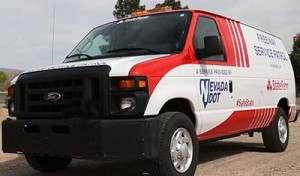
did you know that nevada has a freeway service patrolAs a car accident lawyer in Las Vegas, I am often reminding clients of what to do in the event of an accident.  Typically, you should call the police for assistance getting to safety and to file a police report.  There is, however, another agency that can help – the Freeway Service Patrol.

Just dial *647 or 911 and either they or the highway patrol will be sent to your location. (Note: do not chat on our website, we are not the Freeway Service Patrol).

The Scoop on the Freeway Service Patrol Program (FSP)

This is a program run by the Nevada Department of Transportation. The FSP operates in the Las Vegas and Reno/Sparks areas.  They provide Incident Response Vehicles in Las Vegas as well.  You may see their vans out and about as they remove stalled vehicles, road debris or help to clear minor accidents as quickly as possible.  They provide accident support so that the wreckage can be cleared and traffic can keep flowing. This also means that if your car has stalled, they can help you.

Just dial *647 or 911 and either they or the highway patrol will be sent to your location.

They Are Certified

The Freeway Service Patrol program is manned by people that are certified in first aid so they can provide basic care as a first responder.  They are also trained in Automotive Service Excellence which means that they are prepared to quickly remove your stalled vehicle after a wreck or mechanical problem. They often work with law enforcement so if you are assisted by an FSP crew, you can still file a police report afterwards.

They Have Set Routes

The FSP drivers have set routes that they need to travel.  These have been assigned based on the areas that have high traffic counts or see a lot of accidents and stalled vehicles.  If you see one of their vans and need help, you can try to waive them down.  You can see their routes on this map and their hours are listed as well.

Tips from a Car Accident Lawyer in Las Vegas

As a car accident lawyer in Las Vegas, I recommend that if you have been in a wreck, you call 911.  They will send the right responder to the scene based on the description of the accident and who is close by.

5 Steps to Take After a Car Accident (Demo)

"accident, anger, answering, background people, businessman, car, car accident, caucasian, causing, cell phone, chilean ethnicity, color image, communication, crash, crashing, danger, day, disappointment, disbelief, distraction, front view, frustration, gesturing, hands on hips, high angle view, holding, horizontal, ignoring, inconvenience, indoors, journey, latin american and hispanic ethnicity, listening, looking at camera, man, mature adult, medium group of people, men and women, mid adult, middle, multi-ethnic group, oblivious, people, phoning, photography, police, problem, risk, scene, shrugging, standing, stress, talking, technology, three quarter length, transportation, vehicles, wireless technology, witness, woman, wreck, wrecked, 30-35, 30-40, 30s, 35-40, 40-45, 40-50, 40s, 45-50, 50-55, 50-60, 55-60, acknowledging, adult, angry, anxiety, auto, automobile, business, business man, businesspeople, calling, causation, cellular, cellular phone, chatting, collision, color, colour, communicating, conversation, conversing, cop, daylight, daytime, dialog, dialogue, discussing, disregarding, distracted, endangering, executive, fellow, female, fifties, fifty, forgetful, frustrating, gal, gentleman, group, guy, hazard, hazardous, hearing, heedless, high angle, hispanic, human, human being, indoor, inducing, inside, issue, jeopardizing, jeopardy, lady, latin american, latin American and hispanic, law enforcement, listener, mad, male, mid life, middle age, middle aged, mobile, mobile phone, motioning, motorcar, overlooking, passenger car, passenger vehicle, perilous, person, phone, pile-up, policing, pressure, rescue services, responding, risk-taking, security personnel, signaling, smash, speaking, talker, telephone, telephoning, tension, thirties, thirty, thoughtless, three-quarter length, transit, transport, treacherous, vehicle, western european, white, wireless, women, "
“accident, anger, answering, background people, businessman, car, car accident, caucasian, causing, cell phone, chilean ethnicity, color image, communication, crash, crashing, danger, day, disappointment, disbelief, distraction, front view, frustration, gesturing, hands on hips, high angle view, holding, horizontal, ignoring, inconvenience, indoors, journey, latin american and hispanic ethnicity, listening, looking at camera, man, mature adult, medium group of people, men and women, mid adult, middle, multi-ethnic group, oblivious, people, phoning, photography, police, problem, risk, scene, shrugging, standing, stress, talking, technology, three quarter length, transportation, vehicles, wireless technology, witness, woman, wreck, wrecked, 30-35, 30-40, 30s, 35-40, 40-45, 40-50, 40s, 45-50, 50-55, 50-60, 55-60, acknowledging, adult, angry, anxiety, auto, automobile, business, business man, businesspeople, calling, causation, cellular, cellular phone, chatting, collision, color, colour, communicating, conversation, conversing, cop, daylight, daytime, dialog, dialogue, discussing, disregarding, distracted, endangering, executive, fellow, female, fifties, fifty, forgetful, frustrating, gal, gentleman, group, guy, hazard, hazardous, hearing, heedless, high angle, hispanic, human, human being, indoor, inducing, inside, issue, jeopardizing, jeopardy, lady, latin american, latin American and hispanic, law enforcement, listener, mad, male, mid life, middle age, middle aged, mobile, mobile phone, motioning, motorcar, overlooking, passenger car, passenger vehicle, perilous, person, phone, pile-up, policing, pressure, rescue services, responding, risk-taking, security personnel, signaling, smash, speaking, talker, telephone, telephoning, tension, thirties, thirty, thoughtless, three-quarter length, transit, transport, treacherous, vehicle, western european, white, wireless, women, “

If you have been in a wreck, you may want to work with a car accident lawyer in Las Vegas.  However, before you ever make that call, there are specific things you should do to protect yourself, your property, and your case.  It is important to keep in mind that after an accident, someone will be found to be at fault or negligent.  Even if you believe that you had no responsibility for the wreck, the other driver may feel the same or work to push blame in your direction.  What you do immediately following an accident can help to build and prove your case.

Step One: Get to Safety

No matter what you do, you need to get to a safe location first.  If you remain in the middle of the road, you risk becoming injured in a second collision.  Other drivers may not see you or pay attention to the fact that you are stopped.  This has led to fatalities as people are hit after surviving the first crash.  Put your hazard lights on and try to drive your car to the shoulder.  Use your horn if necessary. If you cannot get out of the car and to safety, call 911 and wait for help to arrive while you do whatever you can to alert other drivers of your presence.  As a warning, walking on a busy road or highway in the dark is incredibly dangerous so you may need to wait for police assistance after sunset.

Step Two: Document Everything

Pull out your smart phone and start taking pictures of everything around you.  You can later show these pictures to a car accident attorney in Las Vegas when discussing your case.  You should have pictures of all sides of your vehicle and the other vehicles involved in the crash.  Also, take pictures of the road where the crash occurred and around it.  Things like street lights and debris can all help to give your story a visual reference for the judge or jury. If there were witnesses, write down their name and contact information as well.

Step Three: File a Police Report

You should call the police immediately following your accident, even if it was a fairly minor one.  You will need to file a police report since that report will be used in your case later on.  The officer will document who was involved in the crash, where it took place, and any relevant details which may be used to confirm your story.

Step Four: Go to the Doctor

It is critical for you to receive medical care right away.  Since you will probably be in shock, you may not realize the full extent of your injuries.  A doctor can check you out, identify any potential problems, make sure that you do not have any internal injuries and help to create a plan for your recovery.  The sooner you receive treatment, the faster you will feel better.

Step Five: Call a Car Accident Lawyer in Las Vegas

To receive financial compensation for your injuries, a lawsuit or claim must be filed.  You may receive a settlement offer as a result of your attorney negotiating on your behalf, or you may need to go to court.  Regardless, working with an attorney early on will help to ensure that all of the evidence is gathered in a timely manner and that you are treated fairly.

What Did You Do?

If you have already been in a car wreck, we want to know what you did afterward.  Leave a comment below and let’s find out who has the weirdest post-accident story!

Clarifying Objections to ‘Form’ During a Deposition in a Nevada Lawsuit or Personal Injury Case

During depositions, some inexperienced counsel simply object by stating “objection, form.” While some jurisdictions allow such a vague objection, Nevada law is clear that such an objection is improper.

Pursuant to Nevada Rule of Civil Procedure [NRCP] 32(d)(3)(B) “Errors and irregularities occurring at the oral examination in the manner of taking the deposition, in the form of the questions or answers, in the oath or affirmation, or in the conduct of parties, and errors of any kind which might be obviated, removed, or cured if promptly presented, are waived unless seasonable objection thereto is made at the taking of the deposition.” (Emphasis added).

Nothing about the text of NRCP 32 suggests that a lawyer preserves the universe of “form” objections simply by objecting to “form.” It is necessary to object at a deposition where the “form” of the question (not the nature of the question) is objectionable and a “seasonable” objection would provide an opportunity to correct the form. See e.g. In re Stratosphere Corp. Securities Litigation, 182 F. R. D. 614 (D. Nev. 1998). [Emphasis added]. In questions to which timely objections should be made during the deposition include those which are leading or suggestive; ambiguous or uncertain; compound; assume facts not in evidence; call for a narration; call for speculation or conjecture; or argumentative. Id.

Objection to “form” is a worthless objection as it does not provide any information to the deposing attorney as to the perceived deficiency in the question to allow correction or re-wording. As noted by In re Stratosphere, an appropriate objection gives the deposing attorney notice of the perceived problem with the question and an opportunity to correct it should they wish.

It is true that “many district courts persist in prohibiting lawyers from saying more than ‘objection to form,’ finding additional comment comprises an improper speaking objection.” See, e.g., Valencia v. City of Santa Fe, No. 12 cv 0137 (D. N.M. 2013). However, that is the rule in the district of New Mexico, not the rule in Nevada. In Nevada, our authority comes from In re Stratosphere, which discusses seasonable objections: It is necessary to object at a deposition where the “form” of the question (not the nature of the question) is objectionable and a “seasonable” objection would provide an opportunity to correct the form. Thus, pursuant to NRCP 32(d)(3)(B) and In re Stratosphere, a parties “form objections” would be unseasonable and improper.

Types of Drug Crimes – Las Vegas Drug Crime Lawyer

In a previous blog post, our Las Vegas Drug Crime lawyer wrote a post regarding common drug crime terminology. Learning what each drug term means is essential to understanding the different types of drug crimes and their charges. The more common types of drug crimes are explained briefly below:

Possession – Drug Possession is one of the more common types of drug crime. While the laws regarding drug possession are different depending on each State, a possession charge can be issued on both a state and federal level as it is illegal to possess controlled substances like heroin or cocaine. Drug possession usually falls under two categories: simple possession and possession with the intent to distribute. Of the two types, simple possession yields a much more lenient punishment.

Trafficking – Compared to possession, drug trafficking is a much more serious type of drug crime. Drug trafficking is the crime of selling, transporting, or importing of illegal controlled substances like cocaine. Drug trafficking is considered a felony and getting convicted for drug trafficking can land you a prison and the offense may be non-probationable depending on the type and amount of illegal drugs involved.

Dealing – Drug dealing and drug trafficking may seem similar, but are two very different things. Drug dealing, like trafficking, varies in definition depending on the State. Unlike drug trafficking, drug dealing is typically conducted on a smaller scale. Drug dealing charges typically yield less severe sentences but like drug trafficking, it really depends on the amount of drugs involved. A large amount of drugs will yield a more severe punishment.

Drug crimes can be charged on both a Federal and State level. State laws regarding drug crimes/charges are much narrower than Federal laws. Getting charged with a drug crime on a state level will yield more lenient sentences while federal levels will yield a much longer sentence and punishment. Drug crime penalties may vary in severity, but if you or your loved one has been charged with a drug crime like the ones listed above in Las Vegas, make sure to contact a Las Vegas drug crime lawyer to fight for you and protect your rights.

The United States Department of Justice has recently endorsed changes in drug cases “that would reserve the harshest penalties for the most serious drug offenders. The Sentencing Commission proposal, first unveiled in January, would lower by two levels the base offense associated with various drug quantities involved in drug trafficking crimes. If adopted, the change would impact nearly 70% of all drug trafficking offenders and reduce the average sentence by 11 months, or nearly 18%, according to the Commission. As an added result of the new proposal, the Commission projects that the Bureau of Prisons population would drop by 6,550 inmates at the end of five years.” If you are charged with a crime contact our Federal Drug Crime Lawyer, Craig W. Drummond, to see if the recent changes to Federal Drug enforcement policy and sentencing would have an effect on your case.

See Attorney General Holder Urges Changes in Federal Sentencing Guidelines to Reserve Harshest Penalties for Most Serious Drug Traffickers

Craig W. Drummond is an experienced trial and criminal defense attorney. Please visit our criminal defense page to learn more about how he can help you fight criminal charges in Las Vegas and the state of Nevada.

Robbery Lawyer Las Vegas

Robbery and Burglary in Las Vegas, Nevada:

ROBBERY

In Las Vegas, Nevada robbery is the unlawful taking of personal property from the person of another, or in the person’s presence, against his or her will, by means of force or violence or fear of injury, immediate or future, to his or her person or property, or the person or property of a member of his or her family, or of anyone in his or her company at the time of the robbery. A taking is by means of force or fear if force or fear is used to:

(a) Obtain or retain possession of the property;

(b) Prevent or overcome resistance to the taking; or

(c) Facilitate escape.

The degree of force used is immaterial if it is used to compel acquiescence to the taking of or escaping with the property. A taking constitutes robbery whenever it appears that, although the taking was fully completed without the knowledge of the person from whom taken, such knowledge was prevented by the use of force or fear.

2.  A person who commits robbery is guilty of a category B felony and shall be punished by imprisonment in the state prison for a minimum term of not less than 2 years and a maximum term of not more than 15 years.

The Nevada robbery law is found in Nevada Revised Statute 200.380.

If you’ve been charged with robbery in Las Vegas, you should contact a Las Vegas Criminal Defense/Robbery Defense lawyer for help with your case.

BURGLARY

In Las Vegas, Nevada, burglary is defined as an act by a person who, by day or night, enters any house, room, apartment, tenement, shop, warehouse, store, mill, barn, stable, outhouse or other building, tent, vessel, vehicle, vehicle trailer, semitrailer or house trailer, airplane, glider, boat or railroad car, with the intent to commit grand or petit larceny, assault or battery on any person or any felony, or to obtain money or property by false pretenses, is guilty of burglary.

2.  Except as otherwise provided in this section, a person convicted of burglary is guilty of a category B felony and shall be punished by imprisonment in the state prison for a minimum term of not less than 1 year and a maximum term of not more than 10 years, and may be further punished by a fine of not more than $10,000. A person who is convicted of burglary and who has previously been convicted of burglary or another crime involving the forcible entry or invasion of a dwelling must not be released on probation or granted a suspension of sentence.

3.  Whenever a burglary is committed on a vessel, vehicle, vehicle trailer, semitrailer, house trailer, airplane, glider, boat or railroad car, in motion or in rest, in this State, and it cannot with reasonable certainty be ascertained in what county the crime was committed, the offender may be arrested and tried in any county through which the vessel, vehicle, vehicle trailer, semitrailer, house trailer, airplane, glider, boat or railroad car traveled during the time the burglary was committed.

4.  A person convicted of burglary who has in his or her possession or gains possession of any firearm or deadly weapon at any time during the commission of the crime, at any time before leaving the structure or upon leaving the structure, is guilty of a category B felony and shall be punished by imprisonment in the state prison for a minimum term of not less than 2 years and a maximum term of not more than 15 years, and may be further punished by a fine of not more than $10,000.

5.  The crime of burglary does not include the act of entering a commercial establishment during business hours with the intent to commit petit larceny unless the person has previously been convicted:

(a) Two or more times for committing petit larceny within the immediately preceding 7 years; or

(b) Of a felony.

The Nevada burglary law is found in Nevada Revised Statute 205.060.

If you’ve been charged with burglary in Las Vegas, you should contact our Las Vegas Criminal Defense/Burglary Defense lawyer for help with your case.

Regardless of your charge, it’s important to seek the help of an experienced criminal defense attorney for your case.

Las Vegas Criminal defense lawyer Craig Drummond has been licensed to practice law in both State and Federal courts in Nevada. An experienced litigator, Craig has proven time and again of successfully defending individuals for crimes like murder, rape, kidnapping, assault & battery, and other criminal offenses. If you’ve been charged with robbery or burglary, contact Las Vegas Criminal defense lawyer Craig Drummond for help with your case.

U.S. Military Pre-Trial Confinement Overview and Federal Civilian Court Review

In the military, a servicemember can be placed in pretrial confinement if there is probable cause (reasonable belief) that:
1.) an offense triable by a Court-martial has been committed;
2.) the person confined committed it; and
3.) confinement is required by the circumstances. See Rule for Court-Martial [RCM] 305(d) (Rules for Court-Martial are promulgated by Executive Order from the President of the United States as outlined in chapter 47 of title 10, United States Code (Uniform Code of Military Justice, 10 U.S.C. §§ 801–946)).

UnderRCM 305(h)(2)(B), within 72 hours of confinement, the servicemember’s commander must make a determination that it is reasonably foreseeable that the Soldier: will not appear at trial, pretrial hearing, or investigation, or will engage in serious criminal misconduct, and that lesser forms of restraint are inadequate.

Under RCM 305(i)(2) the servicemember’s continued confinement is to be reviewed by “a neutral and detached officer” within 7 days who reviews the “probable cause determination and necessity for continued pretrial confinement.” The requirements for continued confinement must be “proved by a preponderance of the evidence.” RCM 305(i)(2)(A)(iii).

There is no known military appellate mechanism to challenge and review the RCM 305(i)(2)(A)(iii), reviewing officer’s finding, and “neutral and detached” status until after the servicemember is charged and the charges are “referred” by the appropriate command to trial by the Military Judge. See RCM 305(j) (the first time that a Military Judge is able to review the servicemember’s confinement is only after the charges have been made and the charges are “referred” to trial to the Military Judge.) Once charges are referred, when determining whether to release the prisoner, the military judge should hold a de novo hearing. RCM 305(j)(1)(B); see also United States v.Gaither, 45 M.J. 349 (C.A.A.F. 1996).

Under Article 10 of the UCMJ [10 U.S.C. § 810] “When any person subject to this chapter is placed in arrest or confinement prior to trial, immediate steps shall be taken to inform him of the specific wrong of which he is accused and to try him or to dismiss the charges and release him.”

Under 28 U.S.C. § 2241(a) “Writs of habeas corpus may be granted by the Supreme Court, any justice thereof, the district courts and any circuit judge within their respective jurisdictions.”

A Writ is authorized if the prisoner “is in custody under or by color of the authority of the United States or is committed for trial before some court thereof…” 28 U.S.C. § 2241(c)(1).

The United States Supreme Court has discussed that it may be proper for civilian courts to intervene in military proceedings for “equitable intervention.” See Schlesinger v. Councilman, 420 U.S. 738, 761 (1975). Further, that such analysis would generally include situations such as “incarceration, or other deprivation of liberty…” Id. at 760.

As recently as 1999, the United State Supreme Court has outlined that military courts themselves are courts of limited jurisdiction and that they can only act in areas where expressly authorized. See e.g. Clinton v. Goldmsith, 526 U.S. 529 (1999.) In that case, the Supreme Court, in their unanimous decision, discussed the military courts limited jurisdiction and noted that a servicemember “may also have recourse to the federal trial court” and outlined the numerous cases and areas of law allowing civilian court intervention in military cases. Id.

Drug Crime Terminology – Las Vegas Criminal Defense Lawyer

Drug crimes can range from minor and moderate to serious and your sentence depends upon the severity of your drug crime and the federal/state statutes of the drug crime. In order to fully understand the severity of a drug crime, you should be familiar with the terminology associated with drug crimes. Below you’ll find a list of drug crime terminology and their definitions.

Controlled Substance – A controlled substance is defined as a substance whose use and distribution is governed by law. Controlled substances are classified by different levels under federal and state statutes. Controlled substances include drugs like steroids and marijuana.

Distribution – Distribution as a drug charge typically translates to a person accused of selling or delivering controlled substances through illegal means. Distribution charges come about when a drug dealer attempts to sell drugs to an undercover officer.

Trafficking – Trafficking is defined as the illegal sale and distribution of a controlled substance. Unlike other types of trafficking, drug trafficking has more to do with the amount of drugs involved when crossing state lines.

Manufacturing – Manufacturing, as defined by federal and state drug laws, is the cultivation or manufacturing of a controlled substance.

Possession – Possession is self-explanatory. Possession of a controlled substance is the most common drug charge made in arrests under local drug laws. There are different types of possessions: Actual possession, constructive possession, and simple possession. Actual possession depicts a situation in which the drugs are on their person while constructive possession depicts a situation in which the defendant doesn’t have the drugs on their person, but a possession charge is still possible under the premise that the defendant had access to the drugs. Simple possession depicts a situation in which the defendant is found in possession of a small amount of controlled substances.

On the subject of possession, drug paraphernalia like syringes or pipes can lead to being charged with a felony/misdemeanor since it is illegal to possess paraphernalia intended or associated with drug use.

Diversion – Diversion is a process that many states allow for first time offenders charged with simple possession of drugs. Diversion allows first time offenders to keep a clean criminal record by pleading guilty and completing a prescribed substance abuse program.

Getting charged with a drug crime and being convicted of a drug offense in Las Vegas will leave you with a criminal record and change your life. If you’ve been charged with a drug crime, contact a Las Vegas Criminal Defense attorney for help on your case.